| OCR Text |
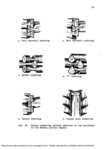
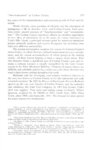
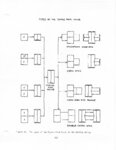
Show LDS Church Architecture 327 saw the arrival of an Elizabethan Tudor Gothic influence promoted by Englishman Arthur Price who had been called to lead the church building program. Another experimental period (1938-42) resulted in an attempt at the new International architectural style. In complete contrast to the former Gothic period, churches were plain, finished in stucco, void of decorative elements, and, in the opinion of most members, too stark and austere to resemble real churches. Thus, in the decade after World War II (1945-56) the church reverted to a Neocolonial style that possessed a certain ecclesiastical dignity most laymen appreciated. In 1953 the Church Building Commktee was organized in an effort to increase control over the building program. An architectural department began to compile an index of plans of the choicest buildings then being constructed. These standardized plans were then made available to wards needing a new building. At the same time, a style the church called "International" was developed for meetinghouses. The general form consisted of a modified A-frame with adjoining wings. Brick and concrete were the main materials, and the style was more acceptable in foreign lands than earlier Colonial designs. With the growth of church auxiliaries, the adoption of the Boy Scout program, and the refinement of priesthood organization, chapels became larger and more complex. Eventually, three distinct divisions of the meetinghouse emerged: the chapel complex, the recreational or cultural complex, and the classroom complex. The church developed chapels that could be built in stages. Each stage was intended to be aesthetically pleasing by itself, or as a whole completed building. A meetinghouse could grow as the congregation grew and as funds were gradually raised. With the church growing larger each year, it became a critical economic necessity to avoid expensive mistakes.27 Present-day critics of church architecture claim that aesthetics and function are suffering because of undue concern for economic expediency. And some sensitive members feel that present church architecture is not as representative of Mormonism's unique and powerful doctrines or beliefs as it may have been in pioneer days. It now seems apparent that even in pioneer times Mormon architecture was not completely indigenous to the church. Perhaps it is in the area of consistency of architectural expression that the greatest future challenges for Mormon architects present themselves. 27 Harold W. Burton, " O u r Church Architectural Development," Improvement ;April 1959), 252-55. Era, 62 |