| OCR Text |
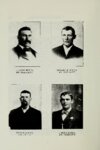
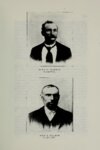
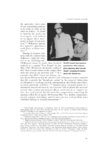
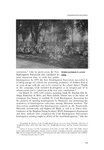
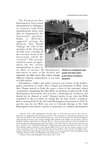
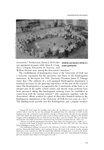
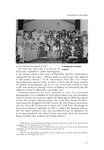
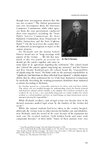
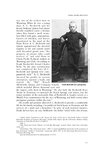
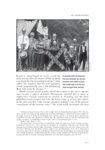
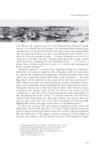
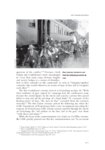
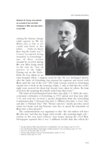
Show UTAH HISTORICAL QUARTERLY exclusively for old soldiers. . . . The spirit behind the celebration is the aim to show to the world and to the people of the United States in particular that there is no longer sectional feeling as a result of the war.” Accordingly, over fifty thousand civilians attended the commemoration.50 To help veterans better afford the trip to Gettysburg, many railroad companies offered special pricing. The Trunk Line Passenger Association, for example, charged just two cents per mile to Gettysburg.51 As the Utah veterans left Salt Lake City on June 27, the Ogden Standard reported that a “happier, jollier crowd is seldom seen.”52 Traveling over “the Oregon Short Line to Ogden, Union Pacific to Omaha, Chicago, Milwaukee & St. Paul to Chicago, Lake Shore & Michigan Southern to Cleveland, Erie to Youngstown and Western Maryland to Gettysburg,” they were scheduled to reach Gettysburg the morning of July 1.53 During the trip they were “side tracked” for several hours in Omaha and offered water that had “the flavor of decaying wood.”54 They found the wait uncomfortable as the cars became very hot—later learning that “the steam heat was turned on in all the radiators.” The veterans passed the afternoon and evening in “torment” and “almost literally roasted.”55 As the Utah veterans neared Gettysburg, they “felt a decided impulse to engage themselves with reviewing recollections of the actual encounter on the battlefield fifty years ago.”56 In 1912, the Salt Lake Telegram profiled eight Civil War veterans living in Utah who fought at the battle of Gettysburg, four of whom attended the 1913 Reunion (John W. Reed, Ezra D. Haskins, Orlando F. Davis, and Norman D. Corser); each of these soldiers experienced the battle differently.57 Reed summarized the battle by comparing it to “my idea of hell.”58 Haskins was the chief bugler for the First Minnesota Regiment. After being ordered by General Winfield Scott Hancock to stop a Confederate advance, his unit charged “into the mouth of the enemy’s terrific fire. We were 262 men against 3000.” Within minutes, 215 men, 82 percent of his regiment, lay dead—one of the highest unit casualty figures during the war.59 Davis, an infantryman in the Thirty-sixth New York Regiment, remembered being “naturally nervous” when he saw “Pickett 50 “Cared for at Gettysburg,” June 29, 1913. “Meet on Battlefield,” June 12, 1913. 52 “Ogden Veterans at Gettysburg,” Ogden (UT) Standard, July 9, 1913. 53 “Veterans Leave for Gettysburg Reunion,” Salt Lake Tribune, June 28, 1913. 54 “Ogden Veterans,” July 9, 1913. 55 “Steam Heat is Turned Into Hot Car on Hot Day,” Salt Lake Tribune, July 10, 1913. 56 “Utah Veterans Enjoy Reunion” Salt Lake Tribune, July 2, 1913. 57 To read about the experiences of those veterans who could not attend the reunion, see “Celebrates Birthday Capturing Man Who Wounded Him on Head,” “Night of Horror on Battlefield After Confederates Fled,” “Rear Guard Before Battle and Followed Retreating Foemen,” and “Wounded, Seeks Rest in Open House and Is Taken by Enemy,” in Salt Lake Telegram, June 29, 1913. 58 The only available copy of this article is missing the left edge. See “——— Is Killed by ——ed of Nephew at ——— Climax of Conflict,” Salt Lake Telegram, June 29,1913. 59 “Hurricane of Lead Kills Eighty-Two Per Cent of Regiment,” Salt Lake Telegram, June 29, 1913. 51 278 |