| OCR Text |
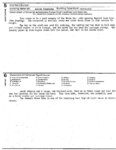
Show WINTER 2013 UHQ pp 4-90_UHQ Stories/pp.4-68 12/5/12 9:38 AM Page 5 THE POWELL SuRVEy four-day journey to the Paria and then to Kanab.1 Less than twelve months earlier, at age thirty-five, Powell had completed his famous run from Green River, Wyoming Territory, to the confluence of the Colorado and Virgin rivers in present-day Nevada. This tangled canyon country cut by the Green and Colorado rivers was a massive area, at the time virtually unknown to those of European descent. As one biographer said of the 1869 trip, “Powell aimed to fill in that blank in the map. His plan, such as it was, took audacity to the brink of lunacy.” Indeed, the physical strain and excitement notwithstanding, “for Powell, the expedition was primarily an intellectual adventure”—an effort to advance science by filling in the “blank space on the map.”2 Powell’s journey with the Mormon exploration party grew out of lessons learned during the 1869 expedition. That first effort had been low budget and ramshackle. Given the quality of the equipment and the limited private funding, it was a wonder Powell and most of his men survived the journey. While they had proven humans could run the Green and Colorado, from Powell’s perspective they had accomplished very little science. Thus, Powell set his sights on a second expedition, this one covering the same route as the first but with the backing, staffing, time, equipment, and supplies to complete a full survey of the canyon country. As William H. Goetzmann has observed, “Because the [1869] voyage had been so hectic and the scientific results so meager, Powell decided to make the trip again in 1871, this time in a more leisurely fashion that would include stops to map the terrain and measure such things as the dip and strike of the geological strata.”3 Key to this second attempt would be sufficient resupply at the few points along the route where people could gain access to the river. In 1870, Powell found himself again in Utah to make such arrangements. By the summer of 1870, as the result of his 1869 journey, Powell was a nationally known figure. As Donald Worster has written, “Powell’s journey down the legendary river of the West was one of the greatest events in the history of American exploration.” 4 Goetzmann labeled the 1869 trip through “the rapids and the whirlpools and the deep forbidding canyons of the unknown Colorado” to reveal “the last mystery of the American West” as “one of history’s most dramatic events.” 5 Consequently, as Edward Dolnick observed, “Powell emerged from the Grand Canyon a hero and a celebrity, a kind of nineteenth-century astronaut.”6 1 A Mormon Chronicle: The Diaries of John D. Lee, 1848–1876, ed. Robert Glass Cleland and Juanita Brooks (Salt Lake City: University of Utah Press, 1983), 2:135. 2 Edward Dolnick, Down the Great Unknown: John Wesley Powell’s 1869 Journey of Discovery and Tragedy through the Grand Canyon (New York: HarperCollins, 2001), 3, 13; emphasis in original. 3 William H. Goetzmann, foreword to Frederick S. Dellenbaugh, A Canyon Voyage (1962; repr., Tucson: University of Arizona, 1991), xvii. 4 Donald Worster, A River Running West: The Life of John Wesley Powell (New York: Oxford University Press, 2001), 200. 5 Goetzmann, foreword to Dellenbaugh, Canyon Voyage (1991), xvii. 6 Dolnick, Down the Great Unknown, 290. 5 |