| OCR Text |
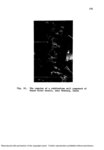
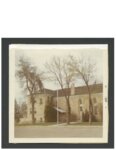
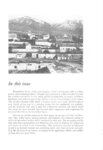
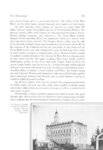
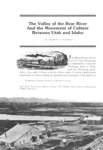
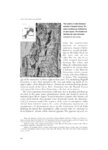
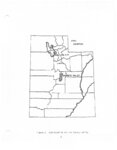
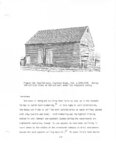
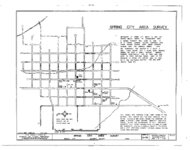
Show Spring City 261 terms to other areas of the United States.1 At first glance the landscape of Spring City appears to be the prototype of a Mormon village; many features do indeed fit neatly into such a classification. Additionally, Spring City's location imparts a feeling of insularity from the outside world. Located almost precisely in the geographic center of the state, the town lies at the foot of the Wasatch Plateau in the Sanpete valley; south and slightly east of the city is Horseshoe Mountain, a landmark to Spring City residents and others from the northern part of the county. Upon close examination one finds mirrored in the Spring City of today elements that reflect a history of more than storybook proportions. i Mormon attempts to settle the Spring City area began early. In the fall of 1851 Brigham Young advised James Allred to select a place for a settlement where he could locate with his numerous posterity and preside over them.2 On March 22, 1852, James Allred, a native of Tennessee, examined the country lying along Canal Creek and four days later returned with his sons and others to begin settling in what was to become the southwest part of Spring City. Soon ether settlers, primarily members of the Allred family, arrived, and log and adobe dwellings were erected. About twelve families spent the winter of 1852 in the Allred settlement. In July 1853 the Walker War erupted. The settlement on Pleasant Creek, later called Mount Pleasant, was raided in mid-July, and residents fled to the Allred settlement. Settlers from both towns cooperated in building a fort by moving their cabins together and filling the openings between with rock walls. The enclosure was just large enough to contain all the dwellings, with the meetinghouse in the center. The fort was completed on July 28, 1853, and stood on the block where the chapel is now located.3 Despite this protective measure, the settlers suffered a considerable loss of stock and horses, and the people moved to the greater safety of Manti. Ms. Rice, a geographer now living in New York, compiled a survey of historic buildings in Spring City for the Society's Preservation Office. The author wishes to acknowledge the support provided by Clifford and R u t h McKinney of Spring City. 1 Richard V. Francaviglia, " T h e Mormon Landscape: Definition of an Image in the American West," Proceedings of the Association of American Geographers, 2 (1970), 5 9 - 6 1 . 2 Milton R. Hunter, Brigham Young the Colonizer (Independence, Mo., 1945), 251. Allred, a Tennessean, moved to Missouri in 1830 and joined the LDS church in 1832. See W.H. Lever, History of Sanpete and Emery Counties (Ogden, 1898), 480. 3 Andrew Jenson, "Manuscript History and Historical Report, 1853-1938, Spring City Ward, Sanpete North Stake," Archives Division, Historical Department, Church of Jesus Christ of Latter-day Saints, Salt Lake City; "Hans Jorgen Hansen" in Hans Jorgen Hansen Family History in possession of Mrs. Edith Schofield, Spring City. |