| OCR Text |
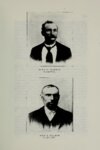
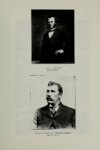
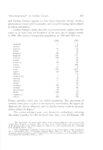
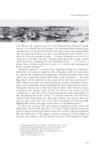
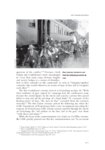
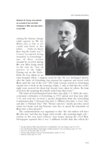
Show ISO Utah Historical Quarterly Responding to the demand for w7orkers were numerous immigrant groups, part of the general influx occurring throughout the United States. In Carbon County the 1900 census figures indicate the presence of Canadians, Chinese, Danes, English, Finns, Germans, Irish, Italians, Japanese, Norwegians, Scots, Swedes, Swiss, and Welsh. Soon after 1900 South Slavs (Serbs, Croats, and Slovenes) and Greeks entered the scene, followed later by Spanish-speaking peoples. How were these immigrants attracted to Carbon County? Coal company agents and railroad representatives often operated both abroad and at Ellis Island, New7 York, recruiting foreign laborers with the promise of work and wealth, often promoting a mythical America. Padrones, or bosses, of a particular nationality also provided workers. These labor agents would supply laborers, extracting a fee from both the worker and company to which they w7ere contracted. In Utah and Carbon County the prime example of the padrone system occurred among the Greeks where Leonidas G. Skliris became know7n as the "Czar of the Greeks." The Japanese labor agent, also providing workers for Carbon County, was Daigoro Hashimoto.0 The grapevine also served to increase immigrant awareness of Carbon County. Once settled, laborers would write back to their homelands and send for relatives—mothers, fathers, sisters, brothers, uncles, cousins. Thus, Carbon County and its mining camps became places of destination for tickets purchased in the old country. One incident illustrating a summoned immigrant's arrival into Castle Gate was recounted as follows: T h e n the train coming, we took the train. W e got into Castle Gate. It was just getting dark, when the conductor started to holler "Castle G a t e next" . . . I t was a little place, a mining town. I got off there in Castle Gate. M y brother and sister thought I was coming the next morning. I don't find nobody there. . . . T h e r e was snow on the ground and you coming out of that air on the train you know, I shiver. T h e litle depot was a box car. T h e best thing I thought for me is I got a piece of paper and write my sister's n a m e and my brother's name. 7 Another significant aspect to the influx of immigrant laborers was their apparent fluidity of movement. That is, the workers often moved from Colorado to Utah and to other work sites throughout the Intermountain region. The flow of men between the coal areas of Colorado "'Helen Z. Papanikolas, Toil and Rage in a New Land: The Greek Immigrants in Utah, 2d ed. rev., 120-33, reprinted from Utah Historical Quarterly 37 (1970) ; Helen Z. Papanikolas and Alice Kasai, "Japanese Life in U t a h , " Helen Z. Papanikolas, ed. The Peoples of Utah (Salt Lake City: U t a h State Historical Society, 1976), pp. 336-42. " Interview with Tony Priano, Helper, U t a h , July 29, 1975. |