| OCR Text |
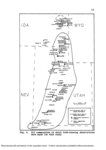
Show UTAH HISTORICAL QUARTERLY The One Who Did It went on to become a powerful medicine man who understood how to use supernatural powers. Numerous stories exist of his ability to control the elements—especially lightning—and of his other forms of power, but these stories take us far beyond the scope of this article. Perhaps the testimony of his maternal granddaughter, Susie L. Yazzie, which she gave at the age of sixty-seven in 1991, will suffice. Speaking of her grandfather,Yazzie said, He was an excellent medicine man and kept things sacred. He would not allow anyone to circle the hogan he was using for a sing [ceremony]. He would tell the people to keep away because the Holy People were present. It was the Holy People who were performing through him, so it was very sacred. And for the same reasons, he did not expect to be paid a high price. He performed the Y4’ii Bicheii ceremony, the Hail Storm Way (}l0ee), the nine day ceremonies, the fire dance and Enemy Way (Anaa’j7), plus the Blessing Way and Evil Way (H0chx=’7j7) ceremonies. He was recognized by many people.40 Hashkéneinii Biye’ died in 1941, a powerful and respected member of his community. No indication exists that he was ever punished for the killing of the two prospectors. Before leaving this incident, however, we must consider several points. Although they form just a short footnote in the history of the Four Corners area, the deaths of Samuel Walcott and James McNally and the subsequent events underscore the problems the military faced in performing its duty in this region. Most obviously, government officials could not fully pursue and prosecute suspects because they did not know the land—its trails and its resources. Kingsbury and Bowman depended totally on Navajo scouts. Those scouts were the only people involved in the affair who had any success in bringing in some of the culprits. At the same time, for those fleeing the law who knew their way, travel was fairly rapid. It was just a matter of a week or so following the brush at Mitchell’s ranch on the San Juan River before horses stolen from his place appeared at Navajo Mountain. The Utes and Paiutes who left victoriously from the fight at Soldier Crossing in White Canyon appeared in the same area in short order. The Navajo scouts also knew where and how to find the people involved and were very much aware of this isolated corner of refuge for those evading the law. As for the military, without maps—their way of navigating this inhospitable terrain—they had little chance of success unless they had guides. Something needed to be done to make travel faster and more predictable. That will be the reason for our subsequent expeditions into “the land of death” and the topic of part two of this story. 40 Susie L. Yazzie, interview by Robert S. McPherson and Marilyn Holiday, August 6, 1991, in possession of the author. 266 |