| OCR Text |
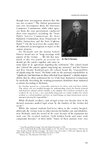
Show Book Reviews and Notices 331 One Time, I Saw Morning Come Home: A Remembrance. (New York: Simon and Schuster, 1974. 320 pp. 88.95.) I a m a memoir addict. By memoir I mean fictionalized history written by people like Wallace Stegner, Samuel Taylor, Virginia Sorensen, and Rodello Hunter, who have m a d e my cultural history come alive in meaningful, humorous, and touching ways. I therefore was eager to read One Time, I Saw Morning Come Home, a "remembrance" by Clair Huffaker, who is about my age and is writing about the Depression that ravaged my home state. I hoped for an inside view of M a g n a , U t a h , a little town near the Salt Flats which has always fascinated me. ( I n my childhood it was the "wrong side of the tracks" where mysterious miners dwelt.) But a remembrance is not a memoir. A remembrance seems to be a tribute, of the kind delivered at anniversary dinners and at funerals. Mr. Huffaker has prepared such a tribute, couching it in fiction and sweetening it to excess. H e gives us M a g n a with its inhospitable dust, and he tells us that his father's death was also the death of M a g n a . But there is little else to interest historians. T h e book reads like women's magazines of a few years ago. It is sentimental, with one-dimensional characters who speak mainly in apostrophes to show a lack of grammatical training: "Best ya c'n do is t' get madder 'n hell at it. An' then swear under y'r breath alot an' move it one corner at a time. But t' be perfectly honest, I sure do prefer deliverin' ironin' boards and lampshades." T h e author tries to give us his parents: Orlean, sweet a n d resilient, her love for her husband bestowing upon her all kinds of courage she didn't know she h a d ; Clair, a wanderer searching for the love his mother refused to give him and finding it in Orlean. W e are told that he is a rough-riding, toughtalking mining m a n , but we are shown By CLAIR H U F F A K E R . this only in one scene—when he is recovering from the horrendous experience of being run over by a train. We are allowed to enter his head and to hear the volley of epithets as they authentically berate the life that forces him to hang on. If Mr. Huffaker had been able to carry this strength throughout, if he had been able to distance himself from his parents—as Stegner did in Big Rock Candy Mountain —- the story might have taken on the life it needs and deserves. But, then, Huffaker is not Stegner, as is obvious from his style. N o noun is allowed to go unadjectived, no verb unadverbed. Adjectives spawn other adjectives, and the cliche, that greatest of ah labor-saving devices, is everywhere. Rain is "bitterly cold and drizzling," pain is "bittersweet." Winters are ' m u r d e r o u s " with their "icy tentacles" and their "still-frozen" land. T h e word " w a r m " is applied to nearly everything (except, of course, murderous w i n t e r ) . Even "tired hugs" are warm. T h e r e is the "blinding blackness" of "terrifying night." T h e darkness in its turn is "surrounding" and "ink black 1 ' or "pitch black"; the road is "wildly curving, frighteningly narrow," but the hero "senses every dangerous inch of the dark way." At one point a character "bursts into silent tears." Huffaker cannot seem to trust his sentences to carry his thought; he loads them down with extra freight. T h e story moves better in those places where someone is injured or when only m e n are involved, as in mining or gambling scenes. I sense that Huffaker's talent lies in plot and action, not in description or in characterization. A canny and careful editor could have been a big help. M A R Y L. BRADFORD Arlington, Virginia |