| OCR Text |
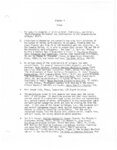
Show ATHLETIC PROTESTS Board of Trustees in which this matter would be up for discussion.”65 Wilkinson’s fears of trustee backlash were confirmed: “Why can’t [BYU] leave such problems to the Board of Trustees to decide?” asked LDS Apostle Delbert L. Stapley. “These two articles are ill-advised to say the least. This matter has been discussed a time or two with the Executive Committee and Board. They have not looked upon [the recruitment of blacks] with favor, as you know. . . . This could present problems about the whole school athletic program.”66 In early January 1969, Wilkinson was relieved when a rumored sit-down strike during BYU’s basketball game against Stanford did not materialize.67 A few days later, he secured approval “to make a statement with respect to Negro athletes and our policy on recruitment.” While some trustees— notably Ezra Taft Benson and Stapley—“thought no statement of any kind should be issued,” N. Eldon Tanner “thought we could no longer avoid making the statement. That turned the tide.”68 The next day, Lester B. Whetten, a BYU dean and the former director of public relations, opined: “The Negro of today is not, and cannot become compatible with B.Y.U. standards.”69 Likewise, BYU’s Speakers Committee quietly rejected appearances by prominent blacks, including Alex Haley.70 Yet almost simultaneously, a panel of BYU professors insisted that the “allegation that BYU is racist in general and . . . anti-Negro in particular requires an answer.”71 Wilkinson quickly discovered that issuing a public statement was more difficult than he anticipated. Meeting with LDS officials Tanner, Gordon B. Hinckley, and Thomas S. Monson, he hoped for a positive statement. However, following comments by BYU administrators Milton Hartvigsen and Robert K. Thomas, the difficulties of the situation—which required finding solutions to “satisfy the blacks” and BYU’s accrediting agencies— became clear. When Hartvigsen “chimed in with the statement that if we did not do something, we were through with athletics at BYU,” Wilkinson became especially frustrated. Annoyed, he asked Hartvigsen to “prepar[e] a very careful memorandum indicating that even if our athletic schedule with other schools was seriously curtailed, we would still need the activity center.” Wilkinson also asked Thomas to “prepar[e] a careful memorandum as to what may be the consequences in other fields of activity if it should be thought that we are 65 Ibid., January 8, 1969. Stapley to Ernest L. Wilkinson, December 23, 1968, Wilkinson Papers. Stapley believed that “the Negro is entitled to considerations” but not to “full social benefits nor inter-marriage privileges with the Whites.” Stapley, letter to George W. Romney, January 23, 1964, copy, Smith-Pettit Foundation. 67 Wilkinson, Diary, January 3, 1969. 68 Ibid., January 9, 1969. 69 Memorandum to Wilkinson, January 10, 1969, Perry Special Collections. 70 University Speakers Committee, Minutes, January 14, January 21, 1969. 71 “BYU Profs Discuss Racism,” Daily Universe, January 14, 1969. 66 215 |