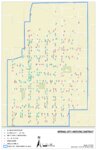
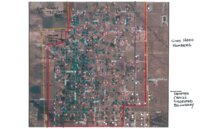
| OCR Text |
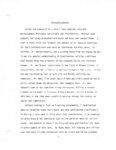
Show Chapter I Introduction: A Framework for Historical Inquiry Aim and Importance of the Study The folk architecture of the Mormon West has attracted the attention of a wide variety of scholars from an early date. This interest has generally centered around determining the specifically Mormon nature of this architecture. Few researchers questioned the uniqueness of the culture itself since its theocratic government, its collective economic and social program, and its well-publicized experiments in reordering family relations all appeared to set the Mormon movement apart from the mainstream of nineteenth century American life. But to what extent, they asked, thinking of the Shakers, Rappites, Moravians and other nineteenth century millenarian groups for whom buildings played a significant role in shaping a collective social identity, could it be said that Mormonism produced or inspired a distinctive domestic building tradition? Order, orthodoxy, obedience--such traits are considered intrinsic to the early Mormon character. Should not they likewise be evident in the material folk culture of Mormonism? These questions have dominated the study of Latter-day Saint western architecture over the years and have served to tie this investigation to a larger scholarship devoted to the Mormon town, the nucleated farm community which served as the vehicle for the Mormon occupation of the Great Basin after 1847. Reflecting the collective nature of nineteenth century utopian |