| OCR Text |
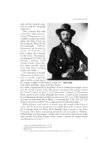
Show Valley of the Bear River 199 Mormons interacted. 8 Malad was soon settled as wdiat Idaho historian Merle Wells has called a "toll road community." 9 It also became the county seat of Oneida County, a far-flung jurisdiction that corresponded in size to the state of Vermont. 10 Cache Valley quickly became known as Utah's granary; and freight outfits passed to and from it, trading for livestock, wdieat, and perishable goods. Trader-stockman Alexander Toponce, who drifted into Utah from the Montana gold fields in 1863, later recalled an 1866 trading trip through Cache Valley: I . . . went up through Cache Valley . . . and loaded up with eggs. I started some time in December. I bought some eggs in Salt Lake and loaded one wagon in Brigham City. Went up the canyon to Mantua and over the divide to Wellsville and Hyrum. Everywhere I bought all the eggs in sight. At Logan I loaded a wagon and went on north to Hyde's Park, Smithfield, Richmond, and Franklin, Idaho. Bought every egg. . . . I pulled over to the west side of the valley to where Oxford is now located. Everywhere I bought eggs. I wrapped each egg separately in pieces of newspapers and put them in boxes of oats packed around them, and covered the boxes in the wagons with more hay and grain. The packing was done so thoroughly that the eggs did not freeze although I did not get them to Helena until March 1st, 1867, and the day we arrived to Helena every thermometer was frozen up. But his eggs were still good and brought $2 a dozen on the Montana market. On another occasion Toponce purchased a 600-pound pig for $36 in one of the Utah settlements, hauled it to Montana and sold it for $600 —a tidy profit even for the freewheeling Toponce. 11 16 As Joel E. Ricks puts it, boom migration into Cache Valley was in a "small way . . . a replica of the 'Ohio fever' which brought thousands of new settlers to the Ohio country following the W a r of 1812." See Ricks and Everett L. Cooley, eds., The History of a Valley: Cache Valley, Utah-Idaho (Logan, U t . : Cache Valley Centennial Commission, 1956), p p . 4 3 - 4 4 . T h e Deseret News of April 18, 1860, described the phenomenon as follows: "Emigrants have been constantly passing through this city [Salt Lake], for two or three months, on their way to Cache Valley, and more especially since the winter season ended. How m a n y have gone there this spring is not known, at least no definite report has been m a d e , b u t judging from the hundreds of wagons and teams t h a t have been moving in that direction, some of the cities, settlements, towns and villages in U t a h County and perhaps some settlements in the southern part of Salt Lake County must have materially decreased in population, in consequence of the great rush northward by those in search of new homes and better locations." 7 For a consideration of the landscape of early Mormon agriculture see Charles S. Peterson, " I m p r i n t of Agricultural Systems on the U t a h Landscape," Richard H. Jackson, ed., The Mormon Role in the Settlement of the West (Provo: Brigham Young University Press, 1978), p p . 9 1 - 9 7 . Ricks and Cooley, The History of a Valley, pp. 32-59, provides a good account of early settlement including the influence of I n d i a n relations upon the process. * M a x Reynolds McCarthy, "Civil W a r Military Operations in the District of U t a h , " (Master's thesis, U t a h State University, 1975), pegs the Indian mortality at somewhere between 224 a n d 368. See p p . 1 0 0 - 1 0 1 . "Wells, Anti-Mormonism in Idaho, p. xiii. 40 Merrill D. Beals a n d Merle W. Wells, History of Idaho, 3 vols. (New York: Lewis Historical Publishing Co., 1959), 1:516. II Alexander Toponce, Reminiscences of Alexander Toponce, Written by Himself ( N o r m a n : University of Oklahoma, 1971), p p . 1 1 5 - 1 6 , 5 3 . |