| OCR Text |
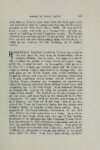
Show UTAH HISTORICAL QUARTERLY caused a dramatic change in attitude.17 It began happening in the early 1880s as a result of the demanding journeys Scanlan made through hundreds of miles of rural Utah to minister to Catholics in such remote communities as Silver Reef and Frisco. During those trips he often found himself dependent for provisions and lodging on the residents of Mormon farm towns along the way. Scanlan’s obituary records that “he was compelled to seek shelter under their roofs, and be it said to their credit he was never disappointed. They had heard of him, and his difficult field of labor, and willingly and most hospitably received him wherever he went. This may serve in great measure to explain the broad tolerance which characterized his dealings with the members of that church.”18 Presumably as a result of those cordial contacts, Scanlan began to receive invitations from Mormon communities to speak about Catholicism. Here once again the historian must keep an eye out for hyperbole: one questions whether towns like Provo—with its lone Catholic family—ever exhibited quite the avid curiosity that Scanlan’s reports to the society indicate. Still, even discounting the reports considerably, they were nevertheless impressive: We sometimes visit exclusively Mormon towns, and they receive us kindly and hospitably, offering us the use of a hall and even of their own churches, wherein to say Mass and hold other services. I visited some of those places lately, and preached night and morning to large and attentive audiences. After the services, many came to me and expressed themselves well pleased with our doctrines, asked me several questions and invited me to come again. This will show you that they are well disposed toward us, and our holy religion. This is as much as we can reasonably expect and is a strong encouragement to us in our efforts and sacrifices to convert and save them through the grace and mercy of God.19 By the end of 1880s, a major reorientation in attitude toward the Mormons was taking place. In 1888, in his last appeal to the Society, Scanlan indicated that converting Mormons remained a goal, but he also offered the following: A friendly feeling, which may eventually result in some good, has been of late years manifested by the Mormons toward the Catholic Church and her institutions. This is owing to the fact that I, with my priests have adopted [a] reconciliatory policy towards them. Instead of abuse, which is unmercifully poured out against them from Protestant pulpits, we preach Catholic truth savoured with charity. [By] this many are attracted to the church, and it’s of daily occurance [sic] to hear some of them say “If the Mormon church be not true, the Catholic Church must certainly be the true & only church.”20 During the anti-polygamy crusade of the 1880s, Scanlan and the Episcopal bishop Daniel S. Tuttle seem to have been the only non17 Scanlan to the Society, October 12, 1876; Kiely to the Society, September 29, 1887; Alemany to the Society, November 7, 1881, Diocesan Archives. 18 Intermountain Catholic, May 15, 1915. 19 Scanlan to the Society, November 1, 1883, Diocesan Archives. 20 Scanlan to the Society, November 2, 1888, Diocesan Archives. 238 |