| OCR Text |
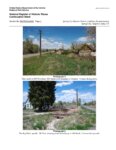
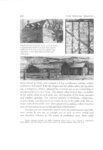
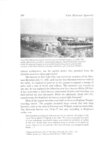
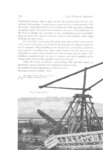
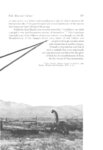
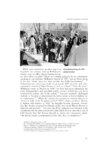
Show UTAH HISTORICAL QUARTERLY accident for a reporter: “I could see the lights of the bus and the train half a mile away, and I watched while the bus pulled up to the tracks. It stopped today the same as usual. It always stops for the crossing. But this time it started up again . . . The bus just sort of exploded and went dragging off down the tracks.”5 The bus was made completely of steel. The right side of the bus was sheared off and the body of the bus came to rest one hundred feet from the railroad crossing, while the more sturdy chassis of the bus was pushed by the train engine almost a half mile further down the track before the train came to a stop. Debris from the bus was scattered along that half mile. The bus chassis forced the lead pair of train engine wheels off of the tracks and welding torches were necessary to later cut the bus chassis out from underneath the front of the train engine. David Witter, an unemployed twenty-two year old truck driver, was catching a ride in a boxcar, walking back and forth, trying to keep warm, when the train came to a stop. He got out to see “the awfullest thing I ever saw.”6 At first, because of all the carnage, he assumed that the train had hit a cattle truck, then he saw the children in the snow, some lying still and some looking “bewildered.” 7 Those victims that looked well enough to be moved, he carried to the warmth of the caboose. “One little girl was standing there screaming, holding for dear life to a little pocketbook.”8 A newspaper reporter arrived to find “Fragments of torn bodies, tattered bits of school texts, battered band instruments and twisted pieces” of the bus, scattered along the tracks on the snowy landscape.9 Within a half hour, hundreds of people gathered at the site: “hysterical parents,” rescue crews, law enforcement officers, ambulances, and anxious onlookers.10 Searching through the wreckage, Highway Patrolman Bob Howard found his own niece and nephew.11 Other workers walked along the tracks with baskets and sacks, gathering bus parts and body parts, while the injured and the dead were taken to the Salt Lake General Hospital.12 The New York Times also reported that Sheriff Grant Young ordered “a thorough search of the snow-covered area near the track to recover parts of bodies and clothing.”13 5 “23 Killed in School Bus Hit By Train in Utah in Storm,” New York Times, December 2, 1938; also quoted in “Engine Plows Into Car [sic] of Jordan Pupils,” Salt Lake Tribune, December 2, 1938. Numerous other articles in this issue of the Salt Lake Tribune cover various aspects of the accident. 6 “23 Killed.” 7 “Traveler Tells of Aiding Hurt Children,” Salt Lake Tribune, December 2, 1938. 8 “23 Killed.” 9 “Engine Plows.” 10 Ibid. 11 “Utah Department of Public Safety: Nation’s Deadliest Traffic Accident,” <http://www.publicsafety.utah.gov/highwaypatrol/history_1939/deadliest_accident.html>, accessed on November 5, 2012. 12 “Engine Plows.” 13 “23 Killed.” 162 |