| OCR Text |
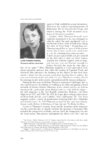
Show BOOK REVIEWS spiritual person by nature, Kingston saw her work as divinely inspired and was described as having a “sixth sense” about the needs of both mother and baby. Her medical training ensured that she had a contingency plan in place should complications arise over the course of a delivery. While Burgess reveals the basics of gendered power and an alternative economic arrangement within the Co-op and the LDCC, her characterization of the Kingston group is rather benign when compared to Andrea Moore-Emmett’s God’s Brothel (2004). Kingston's sister-wife Rowenna was one of the founding members of Tapestry Against Polygamy, an organization to help stop physical and sexual abuse within polygamist sects. Burgess briefly discusses Rowenna’s story and hints at moments where Kingston delivered babies from mothers who had been sexually abused. However, there is no mention of incestuous marriages, teen mothers, preventable deaths, or children born with birth defects (ranging from not having fingernails to fused limbs) as former polygamist women describe in God’s Brothel. For the reader expecting these claims to be verified by a midwife to fundamentalist polygamists, Burgess and Kingston offer only silence. Perhaps this is due to Kingston's personal nature. Burgess explains that Kingston’s door was always open to anyone in need. In a delivery, Kingston’s primary objective was to ensure that both baby and mother were cared for, to introduce the child's spirit to the world, and to encourage instant bonding between mother and child. Kingston's career grew outside of her community as more parents chose home births. Her position as both an experienced LPN and a midwife allowed her to create bridges between sometimes antagonistic medical professionals and home birth advocates. A biography written by a psychologist, Kingston's story does not come heavily footnoted or extensively connected to the background material one might expect of a professional historian. Drawing upon a series of interviews conducted with Kingston, at times it is difficult to discern Burgess's voice from that of her subject. Also problematic is a lack of linear storytelling that is essential to biography. This tendency to jump back and forth through time proves difficult for the reader, since biographical writing requires linear progression for structural support. Despite these flaws, the story of Laurine Ekstrom Kingston's life is an important addition to better understanding women’s roles in medicine, the home birth movement, and religious history in Utah and the United States. MELISSA FERGUSON Utah Division of State History 199 |