| OCR Text |
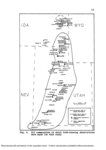
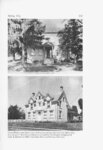
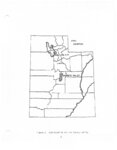
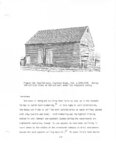
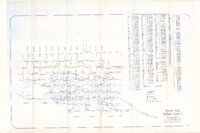
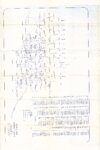
Show buildings has been the size of the Mormon region itself. Researchers bent on establishing uniformity within the Mormon West have felt compelled to study all of it--from Idaho to Arizona--and consequently no one area has been studied completely or well. in taking an opposite approach. My own interest has been I have chosen here to study one small part of the Mormon region both systematically and comprehensively. For this work I picked the Sanpete Valley in central Utah. Located some 100 miles south of Salt Lake City (Figure 3), the Sanpete Valley provided an excellent research area for several reasons: First, since my basic goal was to study Mormon town life and its effects on the behavior of individual Saints, it was necessary to locate a place to work that provided an opportunity to view this relationship in both detail and depth. The Sanpete Valley consists of ten nucleated towns, a number which could be studied completely yet at the same time could provide a quantity of data which would allow generalization. Second, to make the project viable, I needed a sizeable number of early houses to study. The Sanpete Valley was one of the first colonies founded outside the Great Salt Lake Valley and its early occupation and subsequent isolation provided a large number of well preserved dwellings dating from the 1850-1880 frontier period. Third, in order to test the concept of cultural convergence, I needed an area which displayed the diversity which characterized the Mormon convert population in general. Because the Sanpete Valley was settled by immigrant Saints from all parts of the eastern United States, Canada, the British Isles, and Scandinavia, it gave me the chance to follow the paths of many streams of architectural tradition and to see how each responded to the conforming powers of town life. 14 |