| OCR Text |
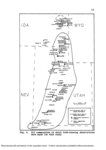
Show 219 Book Reviews and Notices Pass). Fie reached the Bear River rendezvous on July 3, 1827—the first American to accomplish an eastward crossing of the Sierra N e v a d a a n d the first to traverse the Great Basin. Smith's motives a n d original destination r e m a i n very m u c h clouded. I t is the editor's wide consideration of these u n resolved points of controversy, however, that gives the present volume m u c h of its value a n d its sweep. Brooks moves skillfully t h r o u g h the maze of possibilities a n d handles t h e entire t h e m e with j u d g m e n t a n d insight. H e brings a n attractive objectivity to the task with his full b u t unobtrusive annotations. O n the other h a n d , one disappointing lapse in analysis must be mentioned — t h e editor's t r e a t m e n t of the Mojave I n d i a n s ( p p . 7 1 - 8 5 ) . Brooks h a s chosen to rely heavily on A. L. Kroeber's Handbook of the Indians of California (1925) while ignoring t h e more recent research of Lorraine Sherer. A check of Sherer's Turning Points: Historical and Sociological D E M O S a n d SARANE S P E N C E BOOCOCK. work on " T h e Clan System" ( 1 9 6 5 ) , " T h e G r e a t Chieftains" ( 1 9 6 6 ) , a n d " T h e N a m e M o j a v e " ( 1 9 6 7 ) , in the Southern California Quarterly would have prevented several errors while providing a m o r e accurate s t a n d a r d against which to c o m p a r e Smith's lengthy observations. This is n o t a n insignificant failing, b u t it is m o r e t h a n compensated for by t h e book's other strengths. Finally, t h e volume h a s been enhanced by t h e careful field notations of T o d d Berens a n d his Explorer C l u b students from Walker J u n i o r H i g h School in Santa A n a , California. Berens worked closely with M o r g a n on this project a n d has aided a n u m b e r of " a r m c h a i r " scholars in their attempts to unravel the confused threads of early western expeditions. T H O M A S F. ANDREW'S Azusa Pacific Essays on the Family. (Chicago: College Edited by J O H N University of C h i c a g o Press, 1978. Xii + 413 p p . Paper, $10.00.) Written u n d e r the sponsorship of the American Journal of Sociology, this book provides the student of the family with an example of interdisciplinary scholarship at its finest. T h e essays in Turning Points result from the successful interchange between historians a n d sociologists. Edited by a p r o m i n e n t historian of the American family, J o h n Demos, a n d an equally skilled sociologist, Sarane Spence Boocock, this book is intended as a stimulus to further interdisciplinary research of the subject matter. As the title indicates, the editors believe the study of the family h a s brought about a reorientation in historical inquiry— away from traditional public a n d official topics a n d toward more in-depth research into personal a n d private experiences of the past. And they a p p l a u d the transition, T h e historians w h o contributed essays to this volume use theory a n d m e t h o d ology from such fields as demography, social psychology, sociology, a n d history. T h e authors effectively incorporate kinship, age stratification, a n d culture into the historical study of such crucial aspects of h u m a n existence as education, work, marriage, sexuality, childrearing, and old age. Although none of the essays is intended to be in any way definitive, all provide a d e q u a t e starting points for further research. T h e book is well organized, with t h e material presented in a tightly structured a n d scholarly m a n n e r . T h e volume is divided into four sections, the first an overview of social research on the family by sociologist Glen H . Elder, J r . T h i s initial essay provides a competent bibliography in sociology to those historians interested in developing an inter- |