| OCR Text |
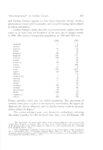
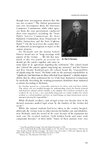
Show 204 Utah Historical Quarterly church president, Harold B. Lee, or that zealous American Ezra Taft Benson. Continuing our consideration of features that set the valleys apart, it may be noted that the Bear River portion of the Great Salt Lake Valley produced the high point in the Mormon cooperative movement at Brigham City under Lorenzo Snow. By contrast, Malad's spirit appears to have been a complex and unlikely combination of religious zealousness, lusty and sometimes venal free enterprise, the deep group consciousness of Welsh and Danes and, for a time, a stubborn determination to overlook differences in controlling Oneida County. A strong group of Reorganized Latter Day Saints carried on an aggressive missionary program there.22 Welsh Mormons asserted their relative prominence with ethnic confidence.23 Bankers and traders looked for a profit in the mining trade and profiteered from the functions of county government. Democrats and Republicans flailed angrily at each other. Yet, an adroit politician named Benjamin Franklin White straddled all issues to draw liberal Mormon votes, fuse Republicans and Democrats, and control the county for years before changing times fixed anti-Mormonism as an insurmountable element in Idaho politics.21 As it influenced Idaho, this acrimonious spirit of intolerance w7as the direct result of the exchange that took place as two differing cultural frontiers met in the valleys of the Bear River. Anti-Mormonism in Utah was in turn strengthened by this confrontation. Although it took far longer than Patrick E. Connor had hoped w7hen he established Soda Springs (originally Morristown) as a "refuge for all who desire to leave the Mormon church, and have not the means to emigrate farther," developments in the region ultimately contributed to basic changes in the society of the tw7o states.25 Place names, too, reveal much about the way a region develops. In the Bear River valleys they reflect the common heritage of the three " F o r general accounts of developments at Malad see Wells, Anti-Mormonism in Idaho, p. 1 3 ; Richard L. Shipley, "Voices of Dissent: T h e History of the Reorganized Church of Jesus Christ of Latter Day Saints in U t a h , 1863-1900" (Master's thesis, U t a h State University, 1969) ; and Glade F. Howell, "Early History of Malad Valley" (Master's thesis, Brigham Young University, 1960), pp. 6 5 - 7 7 . Views of the Reorganized Church of Jesus Christ of Latter Day Saints' activity there may be found in A, Metcalf, Ten Years Before the Mast . . . How I Became a Mormon and Why I Became an Infidel (n.p., n . d . ) , pp. 5 4 - 7 7 ; and H. N. Hansen, "An Account of a Mormon Family's Conversion to the Religion of the Latter Day Saints and of Their T r i p from Denmark to U t a h , " Annals of Iowa 2 (Summer and Fall, 1971), especially pp. 776-79. 23 See the reference to folklore of ethnic relations at Malad in William A. Wilson, "Folklore of Utah's Little Scandinavia," Utah Historical Quarterly 47 (1979) : 24 Wells, Anti-Mormonism in Idaho, pp. 11-20, and F. Ross Peterson, Idaho: A Bicentennial History (New York: W . W . N o r t o n , 1976), pp. 91-114. 2a Quoted in Wells, Anti-Mormonism in Idaho, p. xii. |