| OCR Text |
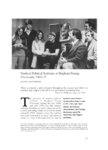
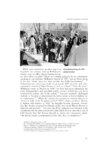
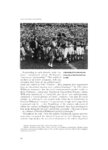
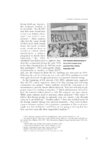
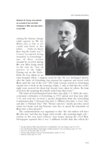
Show ATHLETIC PROTESTS church taught that the restriction was God’s will.1 Beginning especially during the American civil rights era of the 1960s, the church found itself at the center of a growing controversy over its policy, which many outsiders branded as de facto racism. Soon, critics began to focus on the church’s educational showpiece, Brigham Young University (BYU), and its intercollegiate athletic program. The present study centers on the race-based anti-BYU intercollegiate athletic protests of the late 1960s and early 1970s, but first reviews BYU’s encounters with issues of race specifically relating to blacks. Protestors portrayed BYU as a symbol of both LDS discrimination and American racism generally. At the same time, tension regarding the church’s policy existed within the BYU community itself, as the orthodox stance of the school’s hierarchy—embodied by its outspoken president, Ernest L.Wilkinson— occasionally clashed with the growing momentum of social change. During the mid-twentieth century, the percentage of LDS students at BYU hovered at about 95 percent.2 Yet despite such seeming homogeneity, students were not entirely “unified on social, political, or even religious questions,” according to historian Heather Rigby.3 Two of the earliest references to blacks made in letters to BYU’s student newspaper support Rigby’s claim. “If those who laughed so loudly at those jokes about negroes [at a campus assembly],” Virginia B. Smith wrote in October 1948, “had stopped to consider whether that would really be the decent thing to do, there would probably have been very little . . . laughter.”4 BYU’s student council wrote, “One of our students has been the object of discrimination because of race . . . [as] a member of the Negro race . . . and we feel that as fellow students the entire studentbody should protest such discrimination to the utmost of our ability. It is a tradition of the Brigham Young University that men be accepted for their worth and not for the color of their skin.”5 In 1954, BYU students debated the U.S. Supreme Court’s recent Brown v. Board of Education decision banning segregation in public schools, as well as related developments.6 BYU’s conservative lawyer-turned-president, 1 Lester E. Bush and Armand L. Mauss, eds., Neither White nor Black: Mormon Scholars Confront the Race Issue in a Universal Church (Midvale, UT: Signature Books, 1984); Newell G. Bringhurst and Darron T. Smith, eds., Black and Mormon (Urbana: University of Illinois Press, 2004). 2 Brigham Young University, Brigham Young University Enrollment Resume, 1977–78 (Provo, UT: BYU Office of Institutional Research and Planning, September 1978), 3, L. Tom Perry Special Collections, Harold B. Lee Library, Brigham Young University, Provo, Utah; John Hawkins et al., “A Study of Current Student Attitudes about Brigham Young University and their Implications for University Fund Raising Programs,” BYU College of Business, Graduate Student Research Report, No. 13, 1969, 47–48, Perry Special Collections. 3 Heather Rigby, “Responses to Racial Issues at Brigham Young University, 1963–1972,” 1997, 8, MSS SC 2897, Perry Special Collections. 4 Virginia B. Smith, letter, Universe, October 14, 1948. 5 ASBYU Executive Legislative Council, letter, Universe, March 3, 1949. 6 Ardis Smith, “CRM [Civil Rights Movement], the Daily Universe, and the 1950s–Part One,” March 19, 2009, accessed November 27, 2011, www.juvenileinstructor.org/crm-the-daily-universe-and-the1950s-part-one; F. Ross Peterson, “‘Blindside’: Utah on the Eve of Brown v. Board of Education,” Utah Historical Quarterly 73 (Winter 2005): 4–20. 205 |