| OCR Text |
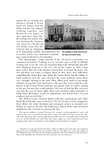
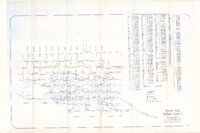
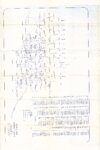
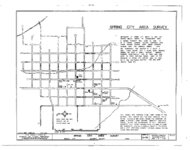
Show United States Department of the Interior National Park Service OMB No. 1024-0018, NPS Form National Register of Historic Places Continuation Sheet Section No. 8 Page 3 Spring City Historic District (Addition Documentation), Spring City, Sanpete County, UT The vast majority of early settlements in Utah were based on the “City of Zion” plat advocated by Brigham Young, colonizer and president of the Church of Jesus Chris of Latter-day Saints (LDS or Mormon Church). The City of Zion concept began with church founder Joseph Smith in 1833, who espoused the advantages of living in compact communities, rather than on isolated farms. The original City of Zion plat is more urban than rural in character with fairly narrow lots. In the Intermountain West, Brigham Young and local church leaders adapted the plat to support an emphasis on family-level subsistence agriculture within a compact village. The individual town lots were generous, usually at least an acre, allowing room for the property to be used for vegetable gardens, fruit trees, and outbuildings for livestock and poultry. Larger-scale agricultural lands were located on outskirts of the town plats. The initial settlement usually occurred on a creek with the water source meandering diagonally through the gridiron of the later town plat. One of the first public works was a cooperative system of canals and irrigation ditches. Water rights were assigned to each property owner. The system was designed to promote self-sufficiency and efficient land use, provide security, and discourage social isolation. Within the community, opportunity and space were provided for education, worship, social gatherings, and the arts. Scarce resources such as timber and water were to be held in common with no private ownership. Spring City is one of an estimated 400 settlements founded on the principles of “Mormon Town Planning” before Young’s death in 1877. 40 Because of Spring City’s relative isolation and slow growth, these planning principles are more intact today than most settlements of the same period. The original nomination documents the initial settlement of Spring City beginning in 1851, when James Allred arrived in Utah and was advised by Brigham Young to move to the Sanpete Valley and “select a place for a settlement where he could located with his numerous posterity and kindred and preside over them.” 41 James Allred moved his family and built a log cabin near today’s Canal Creek at the south end of today’s Spring City in 1852. That year one of Allred’s sons, James T. S. Allred, completed the first survey of the area, dividing a tract of one-hundred acres into five-acre blocks. Crops were planted and twelve families spent the winter of 1852 in what was then known as the Allred Settlement. Conflicts with the native Sanpitch Utes, who used the area for fishing and hunting, forced the settlers to fashion a log fort from their cabins, even after the settlement was reinforced by 50 Danish families in October 1853. For a time, the settlement was nicknamed Little Denmark. Due to extreme temperatures, a lack of food, and Ute skirmishes, the settlement was abandoned in 1854. After five years living in the nearby settlement of Manti, and later, in Fort Ephraim, the settlers returned in 1859. That year, Albert Petty, the county surveyor, completed the first townsite survey, including 640 acres of farmland adjoining it. The outlines of this rectangular grid of 110 five-acre blocks divided into four 1.25acre lots remains visible today, though the townsite is still partially undeveloped. Little Denmark had been renamed Spring Town by the time of the 1860 census enumeration. The population was 263 persons divided into 54 households. Nearly all of the male heads of household were listed as farmers. Several men were listed as farm laborers. John Davis was a shoemaker and Orson Hyde, the highest-ranking LDS church leader, was a minister. Five of the six female household heads had occupations: Anna M. Larson, seamstress; Mary A. Donnoly, servant; Mary Allred, weaver; Emma Allred, seamstress; and Victoria Black, tailoress. Most of these women appear to be polygamous wives with their own homes. Other sources note that two men established mercantile in their homes, in addition to being farmers. During the settlement period, the townsite plat and the few remaining settlement buildings set the precedent for the patterns of development that continue in the community today. Salient features include the wide streets, semi-rural blocks, and the placement of houses with uniform setbacks at the corners of the lots. Spring City’s relatively small fiveacre town blocks precluded one aspect of the City of Zion plat: lots configured so that houses face alternating streets on 40 41 Richard L. Jensen, “Colonization” in Encyclopedia of Mormonism, (New York: Macmillan Publishing Company, 1992), p. 290-294. As quoted in Spring City Historic District, NRHP nomination (1980), sec. 8. p. 2. |