| OCR Text |
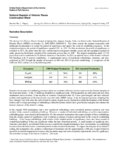
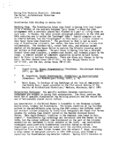
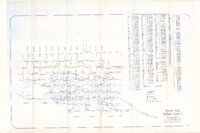
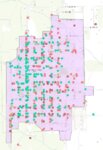
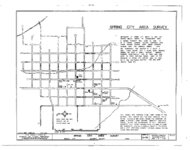
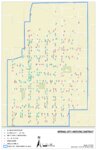
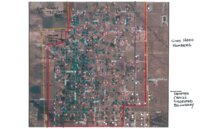
Show United States Department of the Interior National Park Service OMB No. 1024-0018, NPS Form National Register of Historic Places Continuation Sheet Section No. 7 Page 1 Spring City Historic District (Addition Documentation), Spring City, Sanpete County, UT Narrative Description Summary The Spring City Historic District located in Spring City, Sanpete County, Utah, was listed on the National Register of Historic Places (NRHP) on October 22, 1980 (NRIS #80003957). This form amends the original nomination with additional documentation to extend the period of significance and update the count of contributing resources. In the original nomination, the period of significance spanned 1851 to 1915. For this nomination, the period of significance is extended to 1972, the point when the city’s architectural development virtually ceased and the population reached its nadir, preserving the historic integrity of the community as described in 1980. 1 The original nomination noted 337 (76 percent) resources contributed to the historic character of the district. In 2021, an updated survey of the district evaluated 402 buildings with 51 percent contributing. A supplemental survey of significant outbuildings, structures, and sites, conducted in 2022 brought the number of resources to 496 with 290 (58 percent) contributing. A comparison of the 1980 and 2022 statistics are in the following table: Evaluation 1980 Original Nomination 2022 Amended Nomination Eligible 337 76% 290 58% Ineligible 106 24% 206 42% TOTAL 443 100% 496 100% Despite a lower ratio of contributing resources, there are a number of factors that have preserved the historic integrity of the semi-rural district: 1) the 33 buildings identified as significant in the 1980 nomination are still extant and have been maintained and/or restored; 2) the majority of resources constructed after 1915 have good integrity and have achieved architectural significance in the four decades since the initial NRHP listing; 3) the development patterns of Spring City have changed very little since the early twentieth century despite recent construction within the boundary of the historic district; and 4) a high percentage of outbuildings within the historic district have good historic integrity and enhance the historic character of the district’s setting. In the original 1980 nomination, only a few significant outbuildings were considered primary resources and were included in the count of contributing buildings. However, a number of individual outbuildings, as well as representative outbuilding types, were noted in the nomination. For this amended nomination, the extant examples of these outbuildings from the original period of significance were evaluated as primary resources and included in the count of contributing buildings. A few larger outbuildings, built outside of the original period of significance, have also been counted as contributing buildings if they are significant within the later contextual periods. A small number of significant sites, structures, and objects, not included in the resource count for the original nomination, have been included as contributing resources from the four historic contextual periods in this amended nomination. To support the integrity of the district’s setting, this nomination also includes a refinement of boundaries for the approximately 1,500-acre original district to reconcile several discrepancies between existing boundary maps and more accurately represent the areas of significance. The amended acreage of the historic district is 1,366 acres. 1 Tom Carter, Spring City Historic District, National Register of Historic Places Inventory ─ Nomination Form, (1980). The nomination was based on extensive research conducted by Cindy Rice and Tom Carter. |