| OCR Text |
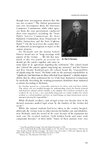
Show ATHLETIC PROTESTS a scholarship at the B.Y.U. to a negro student from Africa.” Wilkinson thought that since McKay had authorized the program, “Brother Lee will have no more to say about this.”24 However, by the end of the month, trustees decided to “discontinue . . . efforts to encourage other Nigerian students to attend BYU.”25 At the time, a total of three Nigerians had enrolled at BYU, and sixteen others, all non-LDS, had applied for admission.26 The decision to end the scholarship terminated the enrollment process for the applying Nigerians. In early October 1963, the church, hoping to fend off accusations of racism as well as rumors of mass civil rights protests planned for downtown Salt Lake City, officially endorsed the federal Civil Rights Act (signed into law on July 2, 1964).27 Yet, “‘Full’ equality to me,” wrote one BYU student, “means the inclusion of religious equality, and two ways of committing ourselves to establish this are to get to know and appreciate the Negro and to pray to our Heavenly Father to give to our Church in our time the revelation that will establish this.”28 Before the end of the month, nationally circulated Look magazine published BYU freshman Ira Jeffrey Nye’s “Memo from a Mormon: In Which a Troubled Young Man Raises the Question of His Church’s Attitude toward Negroes.” Nye asked, “Can the principle of equality be reconciled with the Mormon doctrine of denial of the priesthood? This is the question that troubles me today.”29 Two months later, Thomas E. Cheney, a BYU professor of English, stated publicly, “If the denial of priesthood to Negroes is interpreted as God’s will, a person might conclude . . . that the doctrine promotes rather than discourages discrimination, for if God denies Negroes equal rights, what other course has man?”30 Complaints about Cheney’s comment quickly followed. BYU’s acting president, Earl Crockett, replied: “I am convinced that his [Cheney’s] intentions were good but he did not use wisdom regarding some of the things he said.”31 Crockett also met with Cheney, who recalled: “He said that the [First] Presidency of the Church were getting a lot of letters, and that they were upset about a lot of the things that were being said. . . . But President Crockett was very kind, and when he read the paper, he wrote me a note saying that he agreed with me in all that I said.” Later, Cheney learned that his promotion to full professor had 24 Wilkinson, Diary, March 3, 1965. Board of Trustees, Minutes, March 31, 1965; see also James B. Allen, “Would-Be Saints: West Africa before the 1978 Priesthood Revelation,” Journal of Mormon History 17 (1991): 207–47. 26 Wilkinson, memorandum of a meeting with the First Presidency, July 7, 1965, Wilkinson Papers. 27 See Conference Report of the Church of Jesus Christ of Latter-day Saints (Salt Lake City: Church of Jesus Christ of Latter-day Saints, October 1963), 91–95. 28 Iwan de Vries, letter, Daily Universe, October 10, 1963. 29 Ira Jeffrey Nye, “Memo from a Mormon: In Which a Troubled Young Man Raises the Question of His Church’s Attitude toward Negroes,” Look, October 22, 1963, 74. 30 “End of Mormon Bias against Negro Seen,” Detroit Free Press, December 30, 1963. 31 Perc A. Reeve and Market Berrett to Ernest L. Wilkinson, January 7, 1964; and Earl C. Crockett to Perc A. Reeve, January 9, 1964, Wilkinson Papers. 25 209 |