| OCR Text |
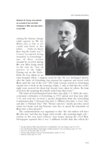
Show UTAH HISTORICAL QUARTERLY class, which operated under the joint management of a committee made up of members of the board of education and the Utah State Kindergarten Association.53 Initially three classes were offered within the kindergarten program: Child Study, Observation in Kindergarten, and Kindergarten Practice and Theory.54 Recognizing the need for more structure to the program, Mary C. May, a graduate of the Chicago Kindergarten Association and leader of the kindergarten department at the University of Utah, proposed that “both the Kindergarten and Primary work would be greatly benefitted if each department would have supplementary training in the work of the other.”55 With the approval of university president Dr. Joseph T. Kingsbury and William M. Stewart, the head of the teacher training department, May wrote to two experts on teacher training, Colonel Francis Wayland Parker of the Cook County Normal School in Chicago and Dr. John Dewey, a professor of the University of Chicago, asking for their opinions about establishing a training curriculum where the kindergarten graduates could teach in primary grades and the primary teacher could use kindergarten methods and materials. Both men supported the proposal and by 1902 two training programs were established—a four year long kindergarten course and an expanded five year normal-kindergarten course.56 Although trained teachers were highly sought, those who did not possess a certificate of efficiency in kindergarten work from a normal school could teach by demonstrating their knowledge of the principles and practices of teaching kindergarten by passing an examination offered by the state board of education.57 After John Park’s death in 1900, Emma J. McVicker, a key figure of the kindergarten movement, was appointed state superintendent of education. She proposed that the school age be lowered to five years and that the first two years of school be spent in kindergarten. She anticipated the need for more kindergarten teachers and encouraged young women to 53 “History of Kindergartens during the Pioneering Period 1874-1898,” 1. Second Report of the Superintendent of Public Instruction of the State of Utah. For the biennial period ending June 30, 1898, (Salt Lake City, 1899), 76, 83. 55 Mary C. May was a native of Chicago who studied at Saint Mary's School in Illinois. She earned an educational degree from The Chicago Free Kindergarten Association where she worked as a kindergarten teacher after her graduation for nine years. Mary established the kindergarten department at the University of Utah where she remained until 1906. “Mary C. May Autobiography,” Anne Marie Fox Felt papers box 2, fd. 10. 56 Fourth Report of the Superintendent of Public Instruction of the State of Utah, for the biennial period ending June 30, 1902. (Salt Lake City: Star Printing Company, 1903), 38. Besides the University of Utah, Brigham Young Academy also offered kindergarten training. The first kindergarten summer training course commenced in 1891 under the leadership of Emma Finch Park. After this summer course the Academy established a kindergarten department where Mary Lyman Gowan taught for a year. Between 1893 and 1897, Anna K. Craig led the department. The next year, in 1898, Jane Skofield became the director of education at the institution. Ida Smooth Dusenberry began her work in the kindergarten department in 1899. She was a graduate from Anna Craig’s class and received her certificate from Wheelock Kindergarten College in Boston. Dusenberry taught at BYA for more than twenty years. 57 Laws of the State of Utah (Salt Lake City: Star Printing Company, 1897), 162. 54 146 |