| OCR Text |
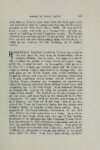
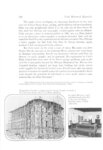
Show FALL 2013 UHQ pp 304-385_UHQ Stories/pp.4-68 9/16/13 1:25 PM Page 329 hArOLD BrIDE INTErVIEW learned that the Carpathia had rescued hundreds of survivors and had turned around to transport those Titanic passengers to New York, where they were scheduled to go, rather than continue its voyage to Europe. As New York City breathlessly awaited the arrival of the Carpathia, the paper’s city editor, Arthur Greaves, assembled the entire Times staff to mobilize what a historian of the Times described as the “ultimate in disaster news coverage.” The newspaper instructed its reporters to gather and write stories about everything related to the sinking of the Titanic, including survivors’ tales, the last deeds of prominent passengers, and relief efforts. Notably, correspondents learned that J. Bruce Ismay, the president of the White Star Line, had survived the tragedy. Greaves remarked that the Times might not get any information from the Carpathia, because the ship had “studiously refuse[d] to answer all queries,” in other words, wireless messages that reporters, relatives, and even President William Howard Taft had attempted to have sent to the ship had received no response. Nevertheless, the Times was certainly going to try. No one yet knew if either of the Titanic’s two wireless operators had survived, and Van Anda was intent on interviewing any Marconi operator, preferably from the Titanic, but also from the Carpathia.13 Van Anda and his staff went to unusual lengths to cover one of the biggest news stories ever. They hired an entire floor of the Strand Hotel, located at Fourteenth Street and Eleventh Avenue, just a block away from where the Carpathia would dock, and outfitted it with four telephone lines with direct connections to the Times’s “rewrite desks.” The newspaper set up more telephone lines in a building at Twenty-Third Street and Eleventh Avenue, and chauffeured cars were ready to whisk the journalists from the pier to the telephones. Sixteen reporters were sent to the pier—though the New York Times possessed only four passes, and those passes would not get their owners very close to the ship.14 In the midst of all this, Ike Russell, bright young star reporter on the Times, attended the meeting with Greaves and anxiously awaited his assignment to participate in the story of the century. As Russell later recalled, Newspapers prepared for the greatest story of their histories breaking under conditions 13 Berger, Story of the New York Times, 197–98. Ironically, the Times was shortly thereafter accused of convincing Marconi Company officials to preserve the paper’s exclusive rights to the story that would be told by surviving wireless operators by having those operators refuse to respond to incoming messages.Van Anda’s biographer asserted that “Van Anda had, by the use of a wireless message, arranged the interview with the surviving operator, before that ship had docked.” Fine, A Giant of the Press, 47. This is inconsistent with Greaves’s statement that the Carpathia was not responding to wireless messages and directly contrary to Russell’s accounts discussed below. 14 Ibid.; I. K. Russell, unpublished manuscript on visit with Harold Bride, n.d., 9, box 16, fd. 6, Russell Papers. Internal references likely date this manuscript in the mid-1920s. A number of Russell’s published articles are in the Titanic files in his papers; it is possible that this manuscript was published, but its presence in unpublished form in his personal papers makes that unlikely. Russell began professionally going by “Isaac K. Russell” or “I. K. Russell,” rather than “Isaac Russell,” sometime in 1919. Cannon, “Isaac Russell, Mormon Muckraker.” 329 |