| OCR Text |
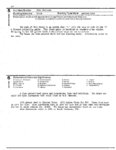
Show WINTER 2013 UHQ pp 4-90_UHQ Stories/pp.4-68 12/5/12 9:38 AM Page 38 uTAH HISTORICAL QuARTERLy as nothing could have gone out that can hurt us,” Locke said.”47 Whether or not the Bingham union had something to conceal is debatable, but the union members in Eureka and Bingham appeared to be less violent towards those they considered traitors than their fellow miners in Idaho and Colorado. Riddell and Adams, unlike Siringo who had to flee the Coeur d’ Alene district in fear of his life, apparently did not suffer any serious repercussions for their actions. Adams, in particular, who moved to Salt Lake City after leaving Bingham, evidently did not fear local retaliation.48 Labor spies had evidently become a genuine problem for the WFM because its officers, Charles Moyer and Big Bill Haywood, who had attended a WFM convention in Salt Lake City in the summer of 1905, both charged that “every one of their most secret meetings had been attended by Pinkerton detectives, employed by the Mine Owners’ Association.” The two men supported their claim by pointing out to reporters “men who fraternized with them in the saloons and restaurants, and others who attended their meetings as spies upon their actions, and argued in the convention, from these premises, that it would be best to hold no more secret sessions, but to open the doors.” According to the Deseret News, the new policy was implemented and local reporters were allowed admittance at many of the WFM meetings.49 Other unions complained about spies in their organizations as well. When Frank Buchanan, president of the Structural Iron and Bridge Workers’ Union visited Salt Lake City in March 1904, he noted during a speech that paid spies had entered the unions and that employers were hiring leaders to mislead their constituents.50 Pinkerton agents, detectives in general, and people who were causing trouble in labor circles were discussed during a meeting of striking telegraphers in August 1907. According to an article in the Ogden Standard Examiner, “Local No. 30 of the Commercial Telegraphers’ union is not to be outdone by the Western Federation of Miners in the importance of their present strike. The boys have discovered that they are being watched and spied upon by Pinkerton detectives. Some of the operators claim to have seen Pinkerton men, whom they were able to identify following them around and spying upon their movements.”51 The suspicion that there were union spies throughout Utah’s mining camps created an atmosphere of mistrust and fear among miners and 47 The Deseret News, May 20, 1907. Ibid. 49 Ibid. On January 15, 1908, a group of mining men, representing fifty producing Utah mines, met in Salt Lake City and organized the Utah Mine Operators’ Association also known as the Utah Mine Owners’ Association.The officers were: John Dern, president; Thomas Kearns, first vice-president; Willard F. Snyder, second vice-president; Harry S. Joseph, secretary; and C. E. Loose, treasurer. The officers, in addition to W. W. Riter, Ernest Bamberger, Lafayette Hanchott and W. C. Alexander, comprised the directorate. See Salt Lake Mining Review, January 30, 1908. 50 Deseret News, March 22, 1904. 51 Ogden Standard Examiner, August 20, 1907. 48 38 |