| OCR Text |
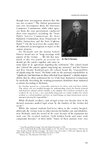
Show WINTER 2013 UHQ pp 4-90_UHQ Stories/pp.4-68 12/5/12 9:38 AM Page 28 uTAH HISTORICAL QuARTERLy implemented or when they occasionally failed, also created new risks for miners already working in a hazardous environment. Existing tension between mine owners and miners was further aggravated when the owners, seeking more luxurious living conditions, moved away from the mining towns, relying on managers to look after their interests. The miners blamed the faceless, “greedy” owners for many of their problems.7 To reclaim their status and to retake control of their workplace, miners organized into local unions. During the first years of the twentieth century, union membership in the United States increased from 868, 500 in 1900 to 2,072,700 by 1904.8 In Utah, hard-rock miners, coal miners and smelter workers also participated in the national trend toward unionization, although many of the early unions “more or less took on the form of fraternal organizations.”9 Mine owners responded to the dramatic increase in unions by forming owners’ associations that worked together to fix wages, to prevent union activists from organizing or obtaining employment and to keep tabs on existing unions. They also worked to divide the miners along ethnic lines and to disenchant them with the union leaders’ political views.10 Pinkerton detectives first became involved in labor issues in the early 1870s when the Molly Maguires, a secret society of Irish coal miners, began perpetrating terrorist activities in Pennsylvania’s anthracite counties. James McParland, a legendary Pinkerton operative, was assigned to infiltrate the Mollies and to stop the murders, violence and destruction of property. Acting undercover for two and a half years using the pseudonym James McKenna, McParland obtained sufficient evidence to convict twenty Mollies for the crimes, and they were eventually hanged. The Pinkerton’s participation in the widely publicized Mollie Maguire case caused some to conclude the agency had an anti-labor bias.11 Successful undercover operatives like McParland possessed several 7 Elizabeth Jameson, All That Glitters: Class, Conflict, and Community in Cripple Creek (Urbana and Chicago: University of Illinois Press, 1998), 25, 76; Jeanette Rodda, “Go Ye and Study the Beehive: The Making of a Western Working Class (New York: Routledge, 2000), 173. 8 Aiken, Idaho’s Bunker Hill, 11; Allan Kent Powell, “The Foreign Element and the 1903-04 Carbon County Coal Miners’ Strike,” Utah Historical Quarterly 43 (1975): 125. According to Aiken, one of the main reasons miners formed unions was because of safety concerns. Many miners contributed one dollar per month to a hospital fund because, due to the dangerous nature of mining, hospitals were very important to miners. There was a general concern that the mine company was spending the miners’ hospital contributions. Jameson also stressed that mining was a hazardous occupation and that “family welfare depended on the health of the wage-earners. Injury sickness and death lurked as constant dangers.”Jameson, All That Glitters, 90-91. 9 Sheelwant B. Pawar, “The Structure and Nature of Labor Unions in Utah, An Historical Perspective, 1890-1920, Utah Historical Quarterly 35 (1967):246-48; David L. Schirer, “The Western Federation of Miners,” in Utah History Encyclopedia, ed. Allan Kent Powell (Salt Lake City: The University of Utah Press, 1994), 632-33. 10 Aiken, Idaho’s Bunker Hill, 46, 51-52; Mark Wyman, Hard Rock Epic: Western Miners and the Industrial Revolution (Berkeley: University of California Press, 1989), 80. 11 Pingenot, Siringo, xix-xxi; Lukas, Big Trouble, 178-87. McParland, who was dubbed by some as the “Great Detective,” was eventually promoted as the head of the agency’s Denver office. 28 |