| OCR Text |
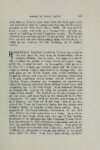
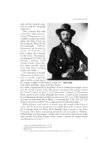
Show ELECTION OF 1856 from the Bible or from one of the popular scriptural homilies of the time, and he prayed as often. He looked for God’s hand in human events.13 He closed his letter with a summary of his religion, sense of providence, and U.S. Constitutionalism, which had been the anchors of his life. “Let us humbly implore His continued blessings,” he wrote, and pray “He may avert from us the punishment we justly deserve for being discontented and ungrateful while enjoying privileges above all nations, under such a constitution and such a Union as has never been vouchsafed to any other people.”14 Buchanan and the Democratic Party had two opponents during the election. The American Party fielded Millard Fillmore, an upstate New Yorker and former U.S. President, who during his career had shown surprising kindness to the Mormons. First he had appointed Brigham Young, the Mormon leader, to be governor of the newly created Utah Terr itory in 1850. He then retained Young dur ing the “Runaway Controversy” a year later, when territorial officers in Utah left their posts and clamored for a new governor and the dispatch of U.S. troops to the western territory. The American Party hoped to steer a middle course in the politics of the time, and it hoped to capture the votes of old-line Whigs, whose party had collapsed before the sectional crisis. Unfortunately, the American Party also had a mean streak about it. Many of its members opposed Masons, Catholics, and the new immigrants who were flooding the nation and threatening “traditional” values. Buchanan’s words about religion were meant to strike a blow against the American Party’s intolerance and nativism and to win as many Irish-Catholic votes as possible. The Republicans also opposed the Democrats. These men were members of a new party, only a couple of years old, that stood for a liberal policy of dispensing western lands to homesteaders, a national program of public works such as a transcontinental railroad, and the regulating of commerce from Washington. Above all else, it wanted an end to the compromises over the possible extension of slavery—the party believed that “popular sovereignty” was a dodge to avoid making hard, moral decisions. For their presidential candidate, the party overlooked some of its most able and seasoned leaders, such as New York Senator William H. Seward or Ohio’s Salmon P. Chase, in favor of “Pathfinder” John C. Frémont, famous for four explorations of the American West as well as for his impulsive, insubordinate dash. In sum, the Republicans declared themselves alliteratively to favor “Free Soil, Free Men, and Frémont.” Events in Kansas Territory were a backdrop to the election. Shortly after Congress declared itself in favor of letting territories decide for themselves about slavery, pro-slavery Missourians crossed the Kansas border to elect candidates of their choosing. Northerners responded with young men from 13 Auchampaugh, James Buchanan and His Cabinet, 159-60, 198. James Buchanan to the Committee of Notification, June 16, 1856, Moore, The Works of James Buchanan, 10:81-5. 14 113 |