| OCR Text |
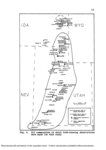
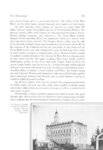
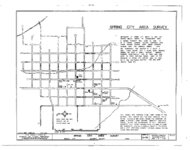
Show 302 Utah Historical Quarterly photographers, traveling church members and tourists, and local casual observers. This essay will explore some of the factors and influences that have led to the fascinating variety of historic religious architecture produced by the Church of Jesus Christ of Latter-day Saints. Within ten years after the arrival of the first company of pioneers to the valley of the Great Salt Lake, ninety-six new settlements were established throughout the territory. Perhaps three hundred other settlements followed, as church-assisted colonization continued until about 1904.1 The extraordinary organizational abilities of church leaders were no doubt an important ingredient in the success of the Mormon colonizing efforts. The farsighted selection and preparation of Mormon converts for the very demanding pioneer life in Utah provides an example that has particular application to the eventual religious architecture of the church. Missionaries in America and abroad were instructed to seek out skilled craftsmen of all types and urge them to bring blueprints and the tools of their trades to America.2 Those who could bring these things were asked by church agents to purchase window glass, nails, tools, and other items from outfitting stations before leaving for Salt Lake City. Upon arrival, workmen were classified and listed according to their skills. In this way the church was kept aware of its work force and could provide local wards and colonizing parties with the exact personnel needed to be self-sufficient and to accomplish specific tasks. New immigrants attended placement meetings at which bishops selected people for their wards according to their skills. At one such meeting, "one bishop said he would take five bricklayers, another two carpenters, and a third a tinman." 3 Before leaving for the settlements, colonizers attended an instructional meeting where advice and encouragement were given. Perseverance and faith were emphasized, questions were answered, and companies were organized in typical Mormon military fashion. The pioneers had a good sense of what they had to do, and in many cases they were successful beyond expectation. In each prospective settlement, the new land was dedicated by prayer. Seeds were planted, irrigation systems were developed, a townsite was surveyed, trees were felled, and work began on the construction Mr. Roberts is architectural historian in the Society's Preservation Office. 1 Milton R. Hunter, Brigham Young, the Colonizer, 4th ed. rev. (Salt Lake City, 1973), 377-83. 2 Douglas C. McMurtrie, ed., The General Epistle of the Latter-day 1847 (Chicago, 1935). Saints December 23, |