| OCR Text |
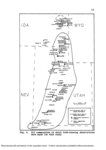
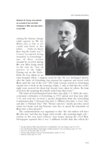
Show Valley of the Bear River 197 and Idaho have not existed to the same degree in Wyoming. However, it should be observed here that the southern part of Utah's Rich County with its two towns—Randolph and Woodruff- -and the home ranch of the vast Deseret Land and Livestock Company reflects marked physical and cultural affinity for the Wyoming counties of Uinta and Lincoln to which it is adjacent. By extension, south Rich County may be said to share the Wyoming cowboy and railroad culture that grew out of the post-Civil War era. In it, high meadow scenes abound. It is a livestock country in which Owen Wister's Virginian might well have been at home and into which the political muscle of the Wyoming Stock Growers Association sometimes extended. The stories of squaw men clustering around Fort Bridger, of the Mormon Indian mission to claim control of southwestern Wyoming in the mid-1850s, of Lot Smith's Utah War exploits, of the cattle empire of William A. Carter, and even of southwestern Wyoming's role as a refuge for Butch Cassidy need not detain us.4 By contrast to the Utah-Wyoming relationship, it is distinctly apparent that the three valleys of the Bear River have served as a transitional linkage between Utah and Idaho. Cultural diffusion through these valleys has been varied and persistent. It began early and continues today. In part, this diffusion has been gradual and subtle. In other respects it has been forceful and abrupt, causing controversy and conflict. The influences behind this diffusion include social, economic, educational, natural, and religious forces that have moved both north and south to contribute to the story of both states. Historically, the valleys of the Bear River lent themselves to this process in several ways. To the south a self-sufficient Mormon community was established early. It was characterized by determination to expand, communitarian impulses, and a strong will to follow its own practices and to reject others. Relative isolation, water, fertile lands, grazing grounds, fuel and timber, and developing markets for farm produce in the mining frontiers to the north presented invitations that drew thousands of Mormon settlers into Cache and Malad valleys without the mobilizing agencies of colonizing missions which were often necessary to call colonists into areas the church wanted to occupy in regions south of Salt Lake City. Although the Mormon community at Bear Lake was something of an exception, settlement in the valleys of the Bear was a natural expan4 For general treatments of southwestern Wyoming see T. A. Larson, History of Wyoming (Lincoln: University of Nebraska Press, 1965). Also see Fred R. Gowans and Eugene E. Campbell, Fort Bridger: Island in the Wilderness (Provo: Brigham Young University Press, 1975), and Fred R. Gowans and Eugene E. Campbell, Fort Supply: Brigham Young's Green River Experiment (Provo: Brigham Young University Press, 1976). |