| OCR Text |
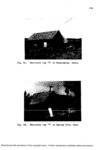
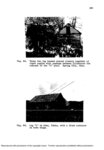
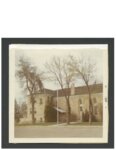
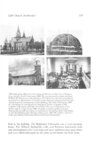
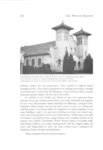
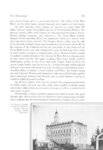
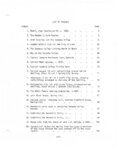
Show LDS Church Architecture Santaquin tithing office (1880) Shivwits rock meetinghouse (ca. 1875) Smithfield Tabernacle (1881-1902) Snowville meetinghouse (1887) Spring City Relief Society granary (ca. 1875) Spring City "Endowment House" (1876) Teasdale meetinghouse (1885) 321 Toquerville Relief Society hall (1880) Uintah Stake tithing office (1887) Virgin school and tithing office ( 1 8 7 4 75) Wasatch Stake (Heber City) Tabernacle (1887-89) Washington Relief Society hall ( 1 8 7 1 75) ECLECTIC OR HIGH-STYLE PERIOD, 1890-1909 Probably no period of church architecture saw greater profusion and reaching out for new styles than the score of years from 1890 to 1910. The 1890s were years of international exhibitionism, expressionism, and overall architectural confusion. For the church the 1890s marked the end of Mormon isolationism. Since 1847 the success of the Mormon system had depended on the submergence of individualism and the unity of collectivism. The federal polygamy raids of 1884-90 brought government intervention that resulted in the dissolution of the Mormon's churchcontrolled society. The Perpetual Emigration Fund was outlawed, schools were put under outside control, church properties were escheated, and work on the Salt Lake Temple stopped. In addition, people reduced their payment of tithes and the church went into debt. An agricultural and mining depression coupled with overpopulation compounded the economic woes. The church building program of the late 1880s and early 1890s suffered accordingly. Very few churches were constructed during these years. By the time the pressure was relieved by the Manifesto ending church-sanctioned polygamy in 1890, new attitudes had developed. Utah made the painful transition from Mormon commonwealth to national commonwealth as symbolized by its achievement of statehood in 1896. As the church agreed, although involuntarily, to ease its tight control in directing settlements and wards, individualism began to rise to the surface. As a result, a remarkable variety of architecture was produced. Before 1890 most meetinghouses, though decorative, were built mainly for functional reasons and were never intended to be status symbols. But after 1890, several "monuments" were produced. While the world was pursuing the new modernism, the church seemed to revert to an eclectic combination of classical styles as its contribution to "modern" architecture. Such oddities as the Salt Lake Nineteenth Ward meetinghouse and the Centerfield meetinghouse, both built in 1890 were |