| OCR Text |
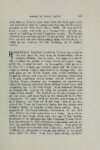
Show 190 Utah Historical Quarterly . . . In our mining camps, we can, if we will, stop the Greeks and Japs from their work, and give our own men and boys a chance for work, giving them the money instead of others. If Utah paid her money to her own people instead of other places, we might be rich now. . . P Such fears were deeply rooted; and interestingly, the same fear of foreign labor currently exists in the United States. I n any event, in 1918 a state committee on Americanization w7as established, with Arch M. T h u r m a n one of the most active members. T h u r m a n stated his fear that " T h e presence in our state of large alien groups presents the possibility of a real menace to the welfare of the state." H e continued by urging the necessity of giving immigrants the opportunity to know American ideals and institutions. If not, those who were preaching discontent would instill them with un-American ideas, thus endangering America's free institutions. 21 O n M a r c h 20, 1919, an Americanization bill became law, having been introduced in January by Sen. George H. Dern. It originally maintained that any alien between the ages of sixteen and forty-five residing in Utah—except those physically and mentally disqualified—unable to speak, read, or write English required by fifth grade standards must attend public evening school classes. Willful violation of the act w7as considered a misdemeanor and was punishable, upon conviction, by a fine of not less than $5.00 nor more than $25.00. T h e State Board of Education and a state director of Americanization were to oversee the program. U n d e r the 1919 law sixty-three Americanization classes were maintained within the supervision of school authorities. Classes were held in Granite, Salt Lake City, Carbon, Jordan, Tooele, Logan, and Ogden districts. Attendance in 1919 of all classes was 60.253. 23 In anticipation of the Americanization Act, the University of Utah in the summer of 1919 offered a course of training for teachers in Americanization work. During the summer of 1920 the course was repeated, and similar courses were conducted at Brigham Young University and the Agricultural College in Logan. 20 Dr. R. D. Harriman, a member of the 23 Emery County Progress, May 4, 1912. State of U t a h , Thirteenth Report of the Superintendent of Public Instruction (Salt Lake City, 1920), pp. 6 3 - 6 5 . 2j Americanization Act is in Laws of Utah, 1919, chap. 93. In 1921 the law was amended and provided for: registration of aliens, an instruction fee of $10.00 from each alien, a lowered age limit, 16-35, an increased penalty of not less than $15.00 nor more than $25.00, and the elimination of the director of Americanization. See especially, Leroy Eugene Cowles, " T h e U t a h Educational Program of 1919 and Factors Conditioning Its Operation" (Ph.D. diss., University 'of California, 1926), p. 56. 20 State of U t a h , Thirteenth Report of . . . Public Instruction, p. 64. 21 |