| OCR Text |
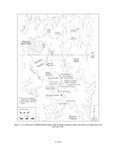
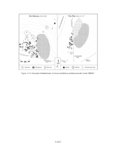
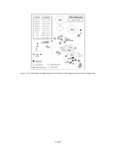
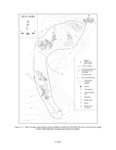
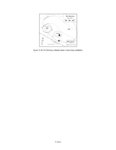
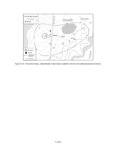
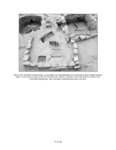
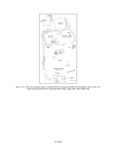
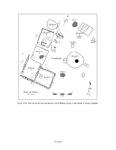
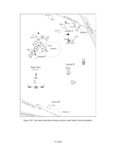
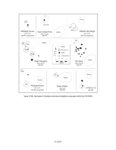
Show Dean (1969:37) pointed out, and Hymn House well exemplifies, "there is hardly enough space in the average [Kayenta] living room for one family, let alone two or more." Hymn House represents the modularization of architectural space for a family that facilitated the creation of large Tsegi phase pueblos. Family units of various size could be attached together to form larger aggregates. Occupation of scattered settlements such as Hymn House by single small families suggests that the social and environmental forces that resulted in the reorganization of Kayenta social structure during the Tsegi phase were at play during the middle Pueblo III period. The social group occupying Hymn House was likely a lineage segment that would have been incorporated into a larger architectural grouping through some form of kinship or other means and then into yet larger aggregated pueblos through some form of cross-cutting social structures such as outlined by Kroeber (1917). Whatever ties existed to unite scattered lineage segments (i.e., nonlocalized lineage and clan organization) also would have served as the social glue to attach segments into the courtyard-oriented sites of the Tsegi phase (see Lindsay 1969:163, 360- 373). Hymn House was abandoned just prior to the Tsegi phase and the family that moved on would have participated in the formation of a Tsegi phase village. Given the evident scavenging of useful tools from Hymn House, the occupants probably did not move far, perhaps to one of the many Tsegi phase villages sprinkled across the Rainbow Plateau. One speculative final aspect of the social organization was brought to mind while reading Graham's (1994) research on Rarámuri settlement mobility while contemplating the late Pueblo III site of Sapo Seco located in the sagebrush flats on the central portion of the Rainbow Plateau. Concerning the Rarámuri, Graham (1994:21) stated that each family "is part of an established network whose members pool their labor to accomplish the task at hand" (such as harvesting crops). Visiting households are "put up" in temporary abodes near the main residence, a form of residential mobility that is the hallmark of the culture. The main habitation area of Sapo Seco (Locus A) consisted of a small unit pueblo, the residential site of an extended family situated for efficient food production and processing. However, the site overall shows a considerably more complex settlement pattern with three other residential loci of scattered pit houses in a northeast to south arc 10-30 m from Locus A. Overall the site had a total of 18 living structures of various types, principally living rooms and mealing rooms, and therefore the site has the appearance of a larger pit house hamlet. The enclosed unit pueblo of Locus A presents a marked contrast to the pit houses of the other loci that are more loosely configured and lack formal communal areas; the only kiva occurred at Locus A. As opposed to Locus A, the structures at the other loci appear to have been occupied on a short-term, seasonal, or intermittent basis. The principal reason for this conjecture is the lack of adequate food storage facilities for over-wintering. It may be mere coincidence that the structures of Loci B-D are located in proximity to Locus A but partially contemporaneous occupancy seems probable, at least initially, and although the occupants of all four loci may have been related by kin, clan, or some other form of social or economic association, Loci B-D are expressly not part of the Locus A pueblo core. The inhabitants of Loci B-D apparently resided at the site on a temporary basis, affiliating themselves with the more permanent Locus A households as the need arose, then splitting off when that need was fulfilled. Superpositioning and remodeling of structures imply that inhabitants returned to previously occupied structures, or that loci were reoccupied by new tenants. This kind of "recombinant" residency has been noted elsewhere in the Kayenta region at the Tsegi phase sites of Betatakin and Kiet Siel (Dean 1968). The motivations for residential clustering are probably numerous and nearly impossible to extract from the archaeological record, at least at Sapo Seco, but the Rarámuri example presents some plausible scenarios, including details as to the social and economic motivations behind such moves (Graham 1994). Temporary residence and mutual assistance in social and ceremonial activities or communal work efforts such as planting or harvesting crops may have provided an initial basis for creating the larger architectural configurations of aggregated pueblos. PROSPECT The brief summary of certain research issues presented here incorporates just some of the topics covered in this report, the bulk of which is devoted to presenting the descriptive details of what the NMRAP excavated, described, and analyzed. There is no way that this chapter, authored by a single individual, could do justice to the diversity of topics covered. The future of archaeological research in the Kayenta region remains a large unknown. CRM projects are still likely to arise on occasion, but as of yet there are few large undertakings that promise to make substantial contributions; thus most progress will have to depend on taking small steps and working on rather confined interests or around the margins of larger topics. Even with a project the size of the NMRAP, tackling complex issues such as economic specialization and social differentiation proved difficult, and testing models of culture change would be even more problematic. There are many basic issues of chronology and culture history that remain to be V.16.13 |