| OCR Text |
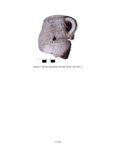
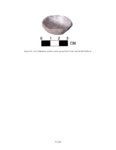
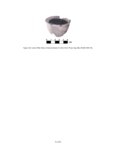
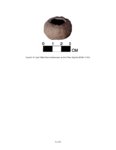
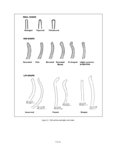
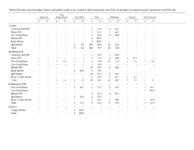
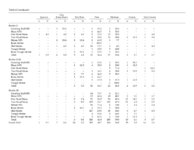
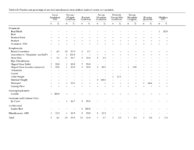
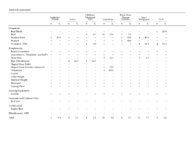
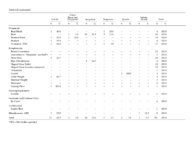
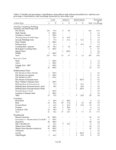
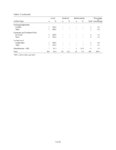
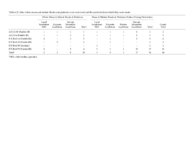
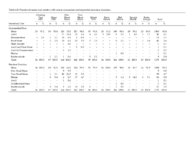
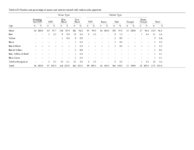
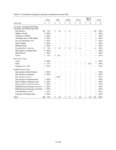
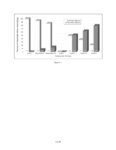
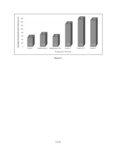
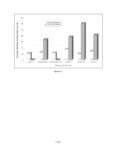
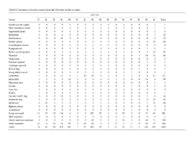
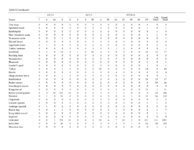
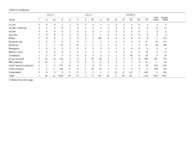
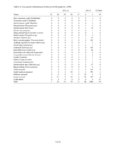
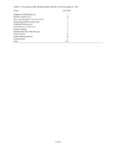
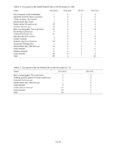
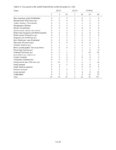
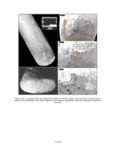
Show assemblages from seasonal and limited activity sites should have a narrower range of vessel forms because fewer activities were performed at them, and habitation sites should have a wider range of forms, reflecting a greater range of activities. Short-term habitations should have highly variable assemblages, and long-term habitation sites should have assemblages that are similar to each other. This pattern is expected because it should take from 3 to 10 years of ceramic discard for the proportion of vessel types in trash deposits to stabilize (Mills 1989b:143). Variety of discarded vessel forms should increase over time for social and technological reasons. For example, some special use forms and types have long use-lives and will be discarded infrequently. We studied vessel form first according to descriptive categories (see below), then vessels and sherds (when possible) were assigned to functional categories such as cooking, serving, and storage (see Mills 1989b). Assignment to functional categories proceeded according to previous studies that have developed a range of ethnographic, experimental, and archaeometric techniques to infer the most probable intended and actual vessel functions from vessel form, use-wear, and residues. Use-wear and residue studies are useful in discovering the actual functions of individual vessels (see Condamin et al. 1976; Hally 1983; Schiffer 1989). These studies are most productive when large numbers of whole vessels are available for study. We recorded use-wear on all whole and partially reconstructible vessels. Techniques such as gas chromatography can be used to identify particular kinds of organic residues in pottery but such methods are still somewhat unreliable and imprecise when used for this purpose. This is partly due to the fact that deterioration of organic residues takes place at different rates and in different ways depending on depositional conditions, and these processes are not fully understood. These techniques were beyond the project budget. Because most sherds were rinsed in plain tub water only, lipids and some other kinds of residues should remain in pores for possible future studies. Occasionally, decorated sherds were acid rinsed to remove calcium carbonate deposits. These (probably fewer than 20) were labeled as acid-washed. Exterior sooting is an easily noted and interpreted residue, even on sherds. When soot adheres to all surfaces and especially to edges, one may infer contact with burning organic materials after breakage, but exterior sooting alone usually signals a part of a vessel used for cooking over a fire. Although soot usually burns off of the base of cooking jars and never reaches upward-facing shoulder areas, it was commonly deposited on lower bodies and under rims. We coded the presence or absence of sooting on each sherd (exterior soot, both surfaces, or absent) to determine which pottery types and vessel forms were used for cooking and which were not. For the most part, however, inferences about vessel functions had to be drawn from connections made by previous researchers (Braun 1983; Hally 1986; Mills 1989a; Smith 1983, 1985, 1988) between vessel characteristics such as shape, size, rim form, and placement of handles. Detailed records of vessel dimensions, volume, and profile were made for whole and reconstructible vessels. These data were compared with patterns noted in previous studies and were integrated with data on use-wear and exterior sooting. We could then assign descriptive categories of vessels to functional categories. Distributions and frequencies of storage, cooking, and serving vessels can be used to augment our understanding of subsistence practices at different kinds of sites and in different time periods. Social and Economic Differentiation In the Kayenta Anasazi area, researchers generally agree that small, autonomous, relatively egalitarian communities were the norm until the late Pueblo III period. Tsegi Phase communities are larger than earlier sites, are often defensively positioned, and have a wide variety of ceramic types, including elaborate polychromes, well-made, intricately decorated black-on-white vessels, and many unusual vessel forms (Lindsay 1969). Whether or not these features and others indicate the rise of hereditary elites that controlled each community's economy from production to distribution, intercommunity relationships, and ideology, is debatable. The most important question to be answered now is what kinds of social differentiation were there, and which kinds increased? How did material culture encode information about social differences (if it did)? As the size of communities increased, the variety of pottery designs and vessel forms apparently also increased. Patterning in the distribution of pottery vessels and specific attributes of vessels in space and time should provide evidence for differentiation along functional, economic, gender, ethnic, and possibly ideological axes. Pottery vessels in burials, together with other artifact types, provide the best evidence (or lack of evidence) for economic stratification, division of labor along gender lines and other gender distinctions, and ethnic affiliations. This line of evidence could not be pursued for two reasons: small sample size and policy restrictions. One burial at Sapo Seco, Locus B, had three vessels, but NNHPD's burial treatment V.2.4 |