| OCR Text |
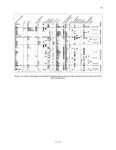
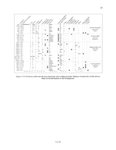
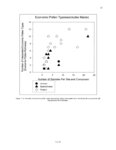
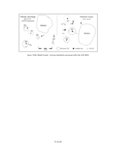
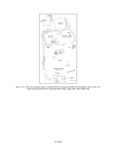
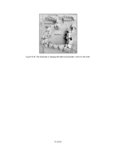
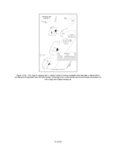
Show Chapter 3 PAINTED POTTERY: ANALYSIS AND INTERPRETATION Kelley Hays-Gilpin This chapter presents an analysis of painted bowl rim sherds undertaken to infer relationships between whiteware and orangeware vessels and their producers, and to address craft specialization, exchange, migration, and aggregation in the northern Kayenta region. Analysis focuses on stylistic similarities and differences between Tusayan White Ware and contemporaneous Tsegi Orange Ware. A final section attempts to explain the predominance of redware bowls and whiteware jars in the late Pueblo II to middle Pueblo III period via symbolic interpretation. Based on burial assemblages that included pottery-making tools and unfired pottery, in the Kayenta area proper, Beals et al. (1945) suggested that Kayenta potters produced both orangeware and whiteware vessels. They studied about 50,000 sherds and vessels from more than 500 sites investigated by the Rainbow Bridge-Monument Valley Expedition in and near Tsegi Canyon in the 1930s. Their ceramic seriation validated the use of Colton and Hargrave's 1937 typology for answering basic questions about chronology and cultural affiliation. They created no new types, but conflated some (such as Betatakin Black-on-white with Tusayan Black-on-white). Nonetheless, they saw a need to examine vessel form and painted pottery decoration in more detail than typological categories provide. In the course of their research, they examined whole vessels in museum collections in addition to ones collected by their expedition. Detailed study of design styles suggested to them that orangeware and whiteware styles were somewhat similar in the Pueblo II period, and highly distinct in the Pueblo III period. Pueblo III orangeware decoration seemed to evolve out of Pueblo II whiteware styles, but Pueblo III whiteware styles seemed to reflect an imported tradition, perhaps, they speculated, from the Flagstaff area. The N16 project attempts to build on the solid foundation left by the Rainbow Bridge-Monument Valley analyses. We have fewer reconstructible vessels to work with, so we focused on rim sherds. Due to time and resource constraints, we initially focused on bowl forms. Our results corroborate those of Beals et al. in many ways but identify some differences between the Kayenta heartland and the Navajo Mountain area, and make some limited comparisons with the western and eastern Mesa Verde areas. We expand on their interpretations by drawing on cross-media comparison (with textiles and baskets), recent studies in ceramic ethnoarchaeology, classic ethnographies, and metaphor theory. RESEARCH QUESTIONS Our first goal was to find out how much variation in rim form is patterned in time to assess the possibility of using bowl rim form for microseriation to help refine site chronologies. Several researchers have demonstrated some success with microstyle chronology of Mesa Verde White Ware (Hegmon 1991) and Mimbres area (Shafer and Brewington 1995) decorated ceramics. LaMotta (2002) has used banding and framing lines on Jeddito Yellow Ware and Winslow Orange Ware bowls to develop a temporal sequence for the Homol'ovi area. Unfortunately, only one N16 project site with an adequate ceramic sample yielded tree-ring dates, and relative chronological placement of assemblages remains imprecise. While we can use ceramic data to suggest relative dates and even date ranges for sites and components, we cannot test this sequence against absolute dates. Therefore, we focused our stylistic analyses on other questions. Second, we wished to know whether the pattern inferred by Beals et al. (1945) for the Tsegi Canyon area holds true in the Navajo Mountain area. Were whiteware and orangeware bowls more likely to have been made by the same potters working with different materials and firing technologies, as in the Tsegi Canyon-Kayenta area? Were these two wares produced by different groups of potters in different areas who then exchanged whiteware for orangeware, and vice versa? Or does some combination of trade and local production account for observed patterns? Examination of materials (Chapter 2) suggests that potters selected different materials (iron-rich vs. iron-poor clay, crushed sherd vs. sand temper, and mineral vs. organic paints) and employed different firing techniques to make whiteware and orangeware V.3.1 |