| OCR Text |
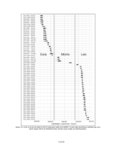
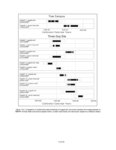
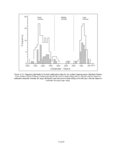
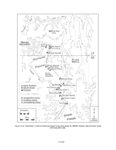
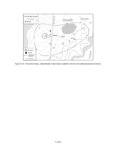
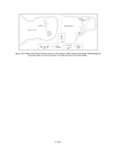
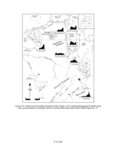
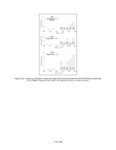
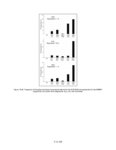
Show originate in mountains outside the Colorado Plateau. Since "a lack of water, and not food resources or foraging efficiency, is the limiting factor in arid settings" (Meltzer 1991:259), it seems reasonable to expect that water sources were a critical variable in determining where middle Holocene foragers located their residential bases. Behavioral Responses With regard to middle Holocene behavioral responses it is informative to use what may have been the situation on the Great Plains as a point of contrast with the Colorado Plateau. Meltzer (1999:411-412) has identified an expansion of diet breadth as one significant behavioral response on the plains on account of reduced bison populations. It might well be true that low-ranked resources were not part of the daily Great Plains diet until the middle Holocene, but on the Colorado Plateau a small seed and cactus pad adaptation had already been in effect since the early Archaic (e.g. Hansen and Van Ness 1996). Given this, how do we measure a shift in diet as a response to middle Holocene drought? "Been down so long it seems like up to me" might reflect a realistic appraisal. The Archaic populations on the Colorado Plateau were already hardscrabble foragers (Meltzer 1991:237). Perhaps we can eventually document Middle Holocene exploitation of the lowest ranked of the low, but any such analysis must realistically consider the early Archaic evidence. Sheehan (2002) was able to document changes in diet breadth on the Great Plains with faunal remains, leading him to conclude that hunter-gatherers may make rather minor adjustments in faunal exploitation in response to major climatic shifts. His analysis was possible because there actually are Middle Holocene sites or components of sites. We would be hard pressed to conduct his sort of analysis on the Colorado Plateau with the current evidence, but perhaps eventually. Meltzer (1991, 1999:412) likewise points to new technologies for coping with the diminished resources of the middle Holocene, with the creation of wells being the "most distinctive and novel technology." Although this may have occurred on the Colorado Plateau, well digging is perhaps less likely because springs and seeps usually emerge from bedrock contacts rather than in the alluvial fill of valleys; another common water source on the plateau not amenable to augmentation by well digging is bedrock catchments, either at pourovers or in weathering basins. Meltzer also points to an increase in number and diversity of plant processing artifacts and features such as grinding tools, roasting pits, and storage pits. On the Colorado Plateau, manos and metates were abundant and well developed in the early Archaic, so it would probably be impossible to make a case for some sort of adaptive shift with these tools. As to features, it is useful to consider this aspect using findings from Sudden Shelter (Jennings et al. 1981) because this single site contained many features that spanned much of the Archaic period (150 hearths, 114 firepits, 53 pits, and 15 "special use" pits). Schroedl's (1980) description and analysis of these features showed that there was a significant decline in number during the middle Holocene and no greater diversity, not until conditions were probably on the upswing well after 5000 BP. One behavioral response mentioned by Meltzer (1999:412) that is abundantly evident on the Colorado Plateau is settlement shifts. I have previously discussed this issue for the Glen Canyon region (Geib 1996a). The NMRAP findings as well as those from the Kaibito Plateau both attest to some significant change, otherwise both areas would have middle Archaic sites similar to those dating both earlier and later. I make no claim that either plateau was totally abandoned during the Middle Archaic because this seems unlikely, at least not without far more investigation, but what is plainly evident from the road ROW excavations is that foragers stopped using the plateaus in the same way that they had for millennia during the early Archaic to the extent that their presence has yet to clearly register. The deposits of Atlatl Rock, Dust Devil, and Sand Dune Caves on the Rainbow Plateau also attest to a profound shift in settlement-all show rather intensive early Archaic use ending between 7000 and 6500 BP, with negligible use during the Middle Holocene. Excavations along the Burr Trail in southeast Utah revealed three open sites dating to the middle Archaic (Tipps 1992). In a subsequent summary of the evidence, Tipps (1998:137-138) highlighted how these sites were concordant with her idea that middle Archaic foragers emphasized open sites for settlement rather than caves and that this practice coupled with the archaeologist's penchant for excavating shelters has created the evidence for regional abandonment or population decline. She has firm proof for middle Archaic open sites that probably functioned as residential bases and not just transient camps. Why they occur there and not on the Rainbow and Kaibito Plateaus must be explained in broader terms than simply shifting settlement to open locations, since the latter two plateaus certainly offer plenty of open camp settings. Moreover, some of the best evidence for middle Archaic occupation comes from shelters along the Colorado River in lower Glen Canyon (Geib 1996b), shelters that contain midden deposits. Tipps's (1998:138) suggestion that proximity to the extensive high-elevation settings of Boulder Mountain and the Aquarius Plateau was a prime attraction seems reasonable, not only because V.13.29 |