| OCR Text |
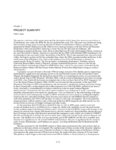
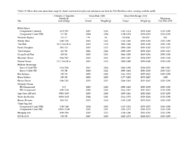
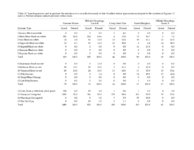
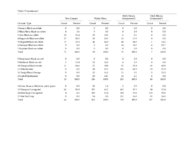
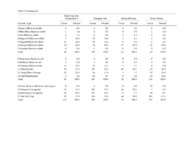
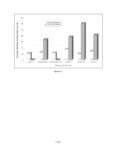
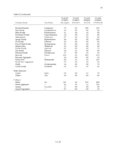
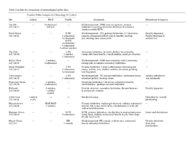
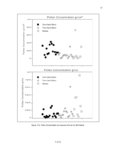
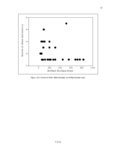
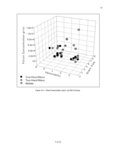
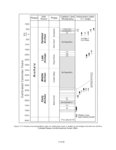
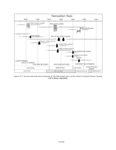
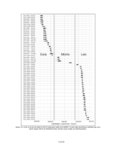
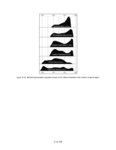
Show performed; these analyses were part of the initial project proposal and research design, but were not funded. Artifacts from the project will be curated in perpetuity so that such analyses may be done in the future. Performance Characteristics Strength testing was conducted on 20 ash-tempered Tusayan White Ware sherds, 20 sand-tempered Tusayan White Ware sherds, and 20 Tsegi Orange Ware sherds to test the hypotheses that ash temper provides a stronger paste than sand temper, and that ash-tempered Tusayan White Ware is stronger than the sherd-tempered Tsegi Orange Ware. Testing was undertaken by Dr. Mark Neupert of the University of Arizona's Laboratory of Traditional Technology (see Neupert, in Mills et al. 1993). Results are summarized in Chapter 4 and presented in detail in Appendix H. Production Step Measure The production step measure was developed by Gary Feinman and others working at Arizona State University in 1981. It is designed to rank ceramic vessels according to labor input. The relative amount of labor invested in making different kinds of pots is used as a proxy for the values of different kinds of vessels. The authors studied the literature on ethnographic pottery making to define a series of manufacturing steps. The number of steps needed to make a particular kind of pottery is counted, judging by the attributes of sherds. One point is tabulated for each step, and the total is used as an "ordinal index of production costs" (Feinman et al. 1981:872). Possible limitations of the method are discussed by Feinman et al. (1981:872-873), but the index was effective using pottery distributions to infer the presence of "status differentiation" (Feinman et al. 1981:874). We calculated this index for the pottery types found in the Navajo Mountain area. Each type is assigned a value (presented with results later in this chapter with an explanation of how the index is calculated). Modified Sherds Modified sherds were identified in the basic analysis format, and each example (except those with repair holes only) was given its own item number and tagged for further analysis. Repair holes are interesting because they indicate that a vessel was valuable enough to the users to attempt to salvage it after cracking, so a tabulation of the types of vessels that exhibit repairs offers a clue to the relative value of different kinds of pottery. However, repair holes are related to the use of the whole vessel in which they appear, and are not included in analyses of reuse of broken pieces for new purposes. Detailed analysis of modified sherds focuses on assigning them to use classes. Following Blinman (1989:37), these classes are bead, button, ceramic scraper, pendant, puki, scoop, knife, and spindle whorl. Sherds that did not fit Blinman's definitions for functional categories were classified as disk, tablet, or simply "worked sherd." CHRONOLOGY Establishing the temporal context for each site or period of occupation is crucial for understanding diachronic change when examining economic specialization and social organization. Ceramic artifacts recovered during archaeological explorations provide one of many ways to establish temporal context. Ceramic artifacts become even more valuable when, as in the case of the N16 project sites, most other avenues yield either only a few dates (dendrochronology) or imprecise dates (radiocarbon). The only drawback with having to rely on ceramic artifacts for dating is that this method applies only to ceramic period sites. Only the Pueblo period sites within the N16 project area are discussed in this section. The Basketmaker period ceramics from Mountainview are some of the earliest ever recovered from the Kayenta Anasazi area. The ceramics from that site, and the single sherd from Polly's Place, are consistent with the early brownware horizon seen between about AD 1 and 500 throughout the Southwest. Basketmaker chronology is discussed in more detail in the Brownware section and especially in Chapter 15. Issues relating to chronology and duration of site occupation can be addressed through temporally sensitive ceramic types, such as those present in some of the N16 assemblages. This is accomplished by classifying all sherds according to the traditional ware/type system and then using the type frequencies of the temporally sensitive types to build a relative chronological ordering of the sites within the project area and with previously recorded sites in the immediate region. Relative quantities of specific ceramic types have proven to be very sensitive time indicators. Conservatively, seriation of types performed with samples of at least 1000 total sherds or more than 300 typeable sherds from each ceramic site or V.2.10 |