| OCR Text |
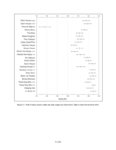
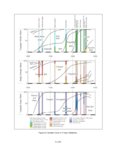
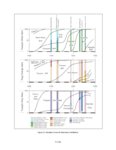
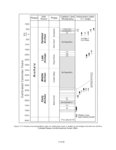
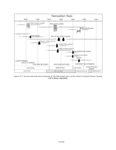
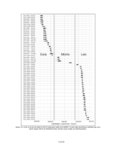
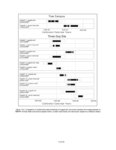
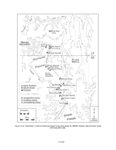
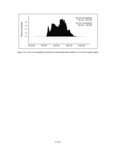
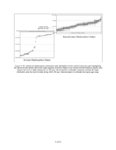
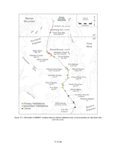
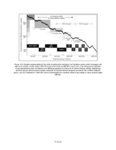
Show of the opportunities for serial foraging as she suggests, but also because these high plateaus would have continued to support stream flow in various nearby creeks (Boulder, Deer, etc.) and also big game populations. The lack of similar extensive high-elevation settings adjacent to the Rainbow and Kaibito Plateaus might be a critical factor accounting for the evident lack of middle Archaic forager sites, either in the open or in shelters. Navajo Mountain is over 3000 m in elevation, but it is a very small area, no more than a point compared to the Aquarius Plateau. Accounting for what happened during the middle Holocene by localized adjustments in the organization of annual settlement and mobility patterns is at a far different scale than wholesale population movement over long distances to more favorable environments of adjacent regions-the Altithermal refugia hypothesis (e.g., Benedict 1979; Benedict and Olson 1978). A model of localized adjustment assumes that the highly diverse settings of the Colorado Plateau were sufficient to allow foragers to persist during the changed conditions of the middle Holocene. The specifics of how this persistence occurred remains to be worked out. River corridors and other permanent water sources are likely to have figured prominently, as well as the numerous widely scattered high-elevation settings such as the Kaibab Plateau, Coconino Plateau, White Mountains, Chuska/Lukachukai Mountains, Abajo Mountains, La Sal Mountains, and more. A key benefit of settings above about 2400 m, especially those of great areal extent, would have been their greater biotic productivity relative to lower elevation settings during a protracted drought. Along with changes in the locations of residential camps, middle Archaic populations perhaps increased the frequency of residential moves, greatly expanded the territory of seasonal rounds, and decreased the periodicity of residential reuse. All of these behaviors could have led to a substantially less visible archaeological record, one greatly diminished in cultural remains and more spatially diffuse. Consequently, the middle Archaic material record might be far more dispersed than that of the early or late Archaic, so perhaps less subject to archaeological discovery and investigation. Even if foragers became more tethered to fewer secure water sources, expanded foraging territories, shorter stays at residential bases, and longer lapses between residential reuse still could have resulted in a diffuse archaeological record. How changes in Archaic mobility and settlement strategies might affect patterning in radiocarbon dates has yet to be adequately addressed. Macroscale patterns observable in Archaic period radiocarbon records for the entire North American Southwest or the Colorado Plateau are certainly instructive. Yet informative details are lost at this scale of comparison. The creation of detailed radiocarbon records for localized areas, such as done by the NMRAP for the Rainbow Plateau or by two other road excavations for the Kaibito Plateau, is a significant contribution. These small-scale records enable a much better understanding of the processes and biases at work: past human behavior, post-depositional impacts, and archaeological predilections. By compiling data sets from small regions it is also easier to adequately evaluate the quality of dates and thereby eliminate chronological "slop" resulting from the inclusion of poor samples. ARCHAIC SETTLEMENT The geographies of subsistence and settlement are intertwined and, among foragers, interdependent; home, whether transitory or permanent, tends to be located so as to enhance the efficiency of work spent acquiring resources, while the mix of resources actually exploited tends to be selected in part with reference to the benefits and costs inherent in transport and travel to and from the home base. (Raven 1991:42) Archaeologists have been interested in prehistoric settlement behavior for one reason or another ever since the pioneering work of Gordon Willey (1953) in the Virú Valley of Peru. Settlement data are important as a means for making inferences about other aspects of past lifeways, especially economic differentiation and integration at all levels of complexity, from a forager band that annually moves itself across regional space for various extractive purposes to a state-like polity with its differentiated parts scattered across the landscape and tied together by various economic and political means. Settlement behavior is a central topic of forager studies and in a large sense this interest can be traced back to Julian Steward's (1938) ethnographic work among hunter-gatherers of the Great Basin and Columbia Plateau and his own preliminary analysis of prehistoric settlement patterns around the Great Salt Lake (1937). Steward's approach was essentially one of simple analogy, long used in archaeology but also criticized (e.g., Binford 1967). To eschew such criticism and associated ad hoc reasoning, studies of forager settlement can begin with theory and then make predictions about the settlement record, as seen in Thomas's (1983) work in Monitor Valley and Kelly's (1985) in the Carson Desert. This approach does not V.13.30 |