| OCR Text |
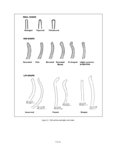
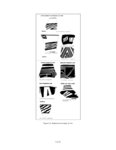
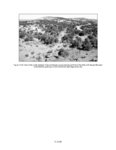
Show necessarily guarantee a better approximation of past reality, as was dramatically shown by the flooding in the Carson Desert that exposed a plethora of forager habitations next to marshes, evidence of a limnosedentary (or semi-sedentary) adaptation, dealing a fatal blow to Kelly's model almost before the ink had dried (Raven and Elston 1991:5). A beginning place for most settlement studies is with the locations in space at which human activity has left concentrations of artifacts or features, specifically with determining what such sites were used for. Were they places of family residence, even if transitory? Or were they used on a more limited basis, such as a temporary resting place for hunters or a location of plant processing or lithic procurement? One basic issue concerns reconstructing or inferring the activity or behavior that generated the cluster of remains that we identify as sites. Foragers on the Colorado Plateau created some sites specifically for symbolic purposes. Good examples are the rock art panels widely scattered across the region, such as the impressive examples know as the Barrier Canyon style (Schaafsma 1971, 1986). Ritual sites for the deposition of split-twig figurines, often with extremely dangerous access (Coulam and Schroedl 2004; Emslie et al. 1987, 1995), provide other good examples. There were probably other sites as well not directly related to acquiring and processing resources of one type or another or to general living, but none were recognized on the NMRAP, so the concern here is with sites easily accommodated within an ecological perspective. Another interest in forager settlement has been describing how sites are distributed across a landscape and attempting to understand the reasons for any distributional regularities within the ecological framework implied by Raven's quote above. This can happen on one of two levels: trying to understand decisions of site location that are spatially general (why was this locality or region used?) and those that are spatially specific (why was this particular spot occupied?). General settlement decisions are principally made on the basis of one or more resource requirements, mainly those pertaining to subsistence, especially bulky staple foods. Specific settlement decisions follow those of general site location and may be predicated on a variety of factors that usually relate to convenience, efficiency, and comfort in daily activities. The former are critical to survival and take precedence over those of specific location, except perhaps during winter in temperate climates when shelter and fuel wood become significant variables. How foragers organized the procurement and consumption of food is another aspect of settlement behavior of interest to archaeologists. Variability in human organizational strategies is highly dependent on the nature of subsistence resource distributions (Ambrose 1984; Dyson-Hudson and Smith 1978). Optimization theory in behavioral ecology-the desire to achieve maximum net gain from resource acquisition (e.g., Charnov 1976; Kaplan and Hill 1992)-is a key assumption underlying most archaeological studies of hunter-gatherer settlement behavior. The assumption of optimality for humans has been questioned as unrealistic since much human decision making seems to better accord with courses of action that are simply "good enough," but not necessarily optimal with respect to some objective measure (Simon 1957:198-199). "To the extent that human decisions are rational, they are rational with respect to a bounded view of the alternatives and consequences that affect the outcome of decisions" (Wood 1978:259). Although choices might not have maximized returns in some ultimate sense, if animals with considerably less cognitive abilities than humans tend to behave optimally when satisfying some predetermined need (e.g., Krebs and Davies 1984), then there is little reason to assume that humans would significantly differ. Indeed, there are important fitness benefits to behaving in an optimizing manner (Smith 1979) even with "limited rationality," or constrained optimization (Foley 1985). Since it is generally true that maximization is best achieved by residing close to the primary resources being used, especially if they are heavy or bulky relative to the energy provided (not nutrient dense), seasonal movement by foragers is expectable. Foragers create sites at different places on the landscape throughout a year principally because food availability is variable in both space and time. On the Rainbow Plateau, like most portions of the Southwest, critical resources rarely co-occur in the same location or time; the former is a problem of geographic placement, the latter of scheduling, yet both are tightly interwoven. For example, the northern part of the Rainbow Plateau is characterized by a shrubgrassland that supports such economically important species as dropseed and ricegrass, but this area lacks nutritious pinyon nuts and is generally poor for hunting, at least for large game. Furthermore, the geographic location of food shifts as the seasons change-the productive ricegrass-covered flats of early summer offer little sustenance later in the year and if the pinyon mast is heavy, the lower slopes of Navajo Mountain would be a preferable location during mid-fall, yet less ideal for winter when cactus pads assume great importance and are limited in abundance compared to lower elevations. Although food has been emphasized, water can also be a critical limiting resource during portions of the year, V.13.31 |