| OCR Text |
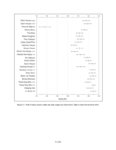
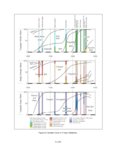
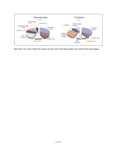
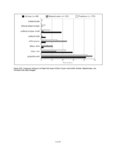
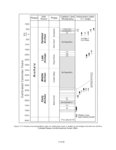
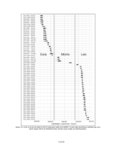
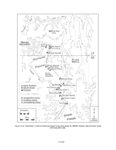
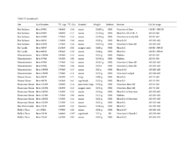
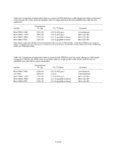
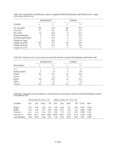
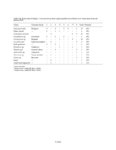
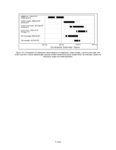
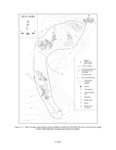
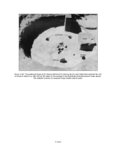
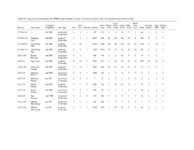
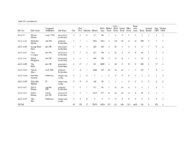
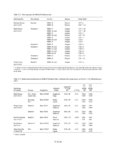
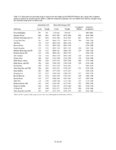
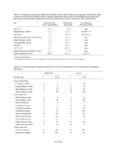
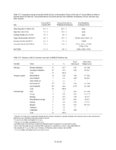
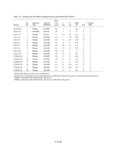
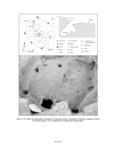
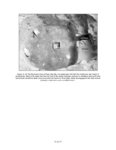
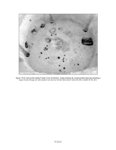
Show significant and this is precisely what lessened effective moisture is likely to have done. In times of drought on the Colorado Plateau there can be little or no harvest for many of the critical annual seed resources such as dropseed, goosefoot, and sunflower. Indeed these plants depend on the summer monsoon rains to generate and then reach maturity, so their productivity would have been impacted in a major way by any shift of the monsoonal boundary. Successive seasons of no or poorly developed monsoon rain could have reduced the abundance of annual plants such as goosefoot and sunflower, which generate anew each year from seeds of past growing seasons. The perennials such as dropseed could have survived for years and not been diminished in abundance, but prolonged drought could ultimately have reduced their frequency as well, especially under heavy herbivore grazing. Dropseed is a warm season grass that depends on summer rains to be productive. Ricegrass (Stipa hymenoides), in contrast, is cool season grass that uses winter to mature and as such might have retained its productive potential during intervals of lessened summer moisture. Whether ricegrass continued to be productive during the Middle Holocene remains to be demonstrated. Even if true, the overall reduced herbaceous plant cover would have had a negative impact on animals. Grasses are a principal source of food energy for ruminant animals such as deer and antelope, although more so for the latter since deer rely more on browse (the foliage, fruits, and nuts of shrubs and trees). Even if cool season grasses remained productive during the middle Holocene, there would have been a shortage of graze starting about July, such that forage might have been in limited supply in the latter half of the growing season. The impact of less effective moisture (decreased precipitation accompanied by increased evaporation from solar insolation) results in a predictable chain reaction-less forage for both animals and humans and consequently fewer animals for predators, including humans. The lack or reduced incidence of middle Holocene packrat middens was sometimes accounted for by the inferred decline in forage resulting from middle Holocene climatic conditions. Of course, it does not require too much of a jump in inference to think that if times were difficult for rodents, then they might have been even more dire for humans. In the context of trying to reconstruct the Holocene paleoenvironmental record for the N16 project area, Peter Koehler was contracted by NNAD to conduct an analysis of packrat middens from the Navajo Mountain area. The hope was to better refine the ecological context of the local Archaic foragers, with a particular interest in the middle Holocene vis-à-vis the bracketing early and late Holocene. In short, is there any indication in packrat midden data for decreased effective forage from climatic change? His results, which are presented in Chapter 7 of Volume I, include 28 radiocarbon dates on middens, which document an essentially continuous series from almost 14,000 years ago to about 1000 years ago. This includes 11 dates between 7000 and 4000 BP, a time poorly represented by assays with reliable cultural associations. Unlike the radiocarbon record for human presence on the Rainbow Plateau, the record for packrats does not reveal any middle Holocene gap. It would seem that whatever the conditions were that led to a diminished human presence in the region did not result in a diminished presence of packrats. It is important to consider the different elevations and settings of the middens, but not all of the dates between 7000 and 4000 BP come from mesic settings, although most do. The obvious difference in biomass needs coupled with the group living of humans seems to adequately account for why packrats might persist in a region that humans found less desirable. The potential for decreased representation of dropseed relative to ricegrass during the middle Holocene owing to lessened summer precipitation cannot, unfortunately, be examined because of processing bias. As Koehler explains in his report, the sieve size used in midden macrofossil processing did not recover tiny seeds such as those of Sporobolous sp. He found a general trend within the midden record for an increase in the relative abundance and frequency of several other plant species important to humans (pinyon pine, yucca, cactus, and ricegrass) from the middle Holocene to recent. Nonetheless, there is no reliable way to correlate surrounding plant density to the plant specimens contained in middens (cf. Dial and Czaplewski 1990). A decline in precipitation also means that less water would be available for daily drinking needs- not only less overall but fewer sources to rely on. Seasonally filled potholes, which abound in many areas of the Colorado Plateau, especially where certain formations such as the Navajo Sandstone occur, could have become far less reliable. At Dust Devil Cave, for example, there is a large weathering basin on top of the sandstone knob that contains the shelter, one that holds water for days after a storm and was likely not just an added attraction of this site but was key to its role as a base camp during the early Archaic. If this source became unreliable, then the closest dependable water supply was several kilometers away in Desha Canyon, which limits the utility of the cave as a residential base. Seeps might have dried up completely as might some springs; other springs could have been reduced in flow, down to seep status. The flow of the few streams in the region might have become intermittent, but even in the worst conditions, rivers such as the Colorado and San Juan would have been dependable sources because they V.13.28 |