| OCR Text |
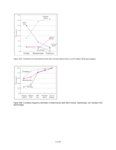
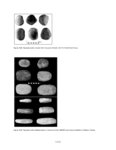
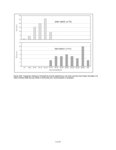
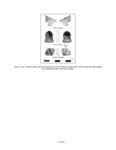
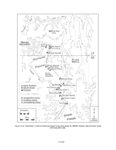
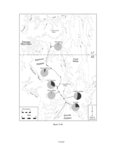
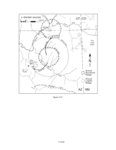
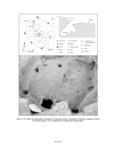
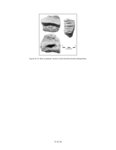
Show 1985:379, Table 98). In contrast, only a single mano blank was found at one of the excavated sites within Segments 1 and 2 of N16 (Russell 1989a). Even more indicative is the abundant flaking and pecking debris at some habitations at the foot of Navajo Mountain (UT-V-13-19, Geib et al. 1985:192, Figure 65). The NMRAP excavations found that grinding tool production debris increases from absent or very low as one moves northward from the Shonto Plateau and onto the Rainbow Plateau; it does not become significant until nearing the foot of Navajo Mountain. The rock fraction of flotation sample heavy fraction should be even more informative of this activity. The NMRAP Puebloan habitations near the base of this mountain also produced unused manos in various stages of completion, further evidence of local production that was not found at habitations farther south (see Chapter 6 and the site descriptions of Volume IV). The production activity might have been all for local use, but there are several reasons to think not. First is the fact that manos, metates, and mauls of Navajo Mountain sandstone occur at sites well away from the source, sites that lack any production debris. Exchange thus seem likely. Also, given the use-life of manos and metates, the amount of debris noted at sites such as UT-V-13-19 seems far in excess of the needs of one small household. The production scale was likely that represented by Mrs. Holgate-part time on a catch-as-catch-can basis in between the other daily chores of life. This seems to be the scale of all craft activity in the Kayenta region and is likely a factor in why it is so difficult to detect and why Kayenta households are sometimes portrayed as autonomous. But as anthropologists have learned, all societies interact with their neighbors to varying degrees and through various culturally structured mechanisms, and material exchange is one of them. Even when the focus of interaction lacks a material basis, such as with intergroup ceremonies, artifact exchange is often involved or serves as a mediating device. Grinding tools highly suitable for intensive maize processing were a real need across much of the Kayenta region, a need that some families living around Navajo Mountain appear to have willingly met by producing more manos and metates than were needed at home. The whole need for grinding tools of special stone arose because of the spread of food production across the Southwest, which set into motion a spiraling process of significant change toward increased economic specialization and social differentiation. Certainly most of what constitutes Southwestern archaeology would not have come into being without food production and the transformations, fast or slow, that it wrought either directly or indirectly. Had prehistoric Southwest groups not taken up maize and other crops, then absent would be all the impressive pueblos that dot the landscape and that provide the destination for so much tourist traffic in the region. Documenting the chronological and spatial aspects of this transition is critical to improving our knowledge of this complex and still much-debated process. The effects of this transition are evident enough in the NMRAP excavation sample given the contrasts between the nature of Archaic and Basketmaker sites as discussed in Chapters 13 and 14 of this volume (see also Geib and Spurr 2002). The effects are also strongly seen in the lithic data examined here, by the contrast between Archaic and Basketmaker debitage and various tools. Although the lithic data clearly reveal that a significant alteration had occurred, they do not provide a reliable proxy measure of the extent of reliance on domesticates, not even with grinding tools. Moreover, the shift away from bifacial tools and the flake debris therefrom to unstandardized cores and core flakes, a trend that the NMRAP data strongly verify as real, is subject to alternative interpretation although reduction in residential mobility or sedentism is clearly implicated, as Parry and Kelly (1987:303) have argued. The NNMRAP flake data document a clear relationship between the rise of simple core technology and what was probably greatly reduced residential mobility, since the Basketmaker debitage assemblage markedly differs from the Archaic assemblage and appears more like the Puebloan one. Given the robust sample size used for this comparison, Parry and Kelly probably would have welcomed the NMRAP data as an excellent addition for making their case that the value of portability and raw material economy in bifaces and other formal tools did not balance out against production costs as people became more settled on the landscape. Because sedentary groups could stockpile material at their residences-the primary places of tool use-there was little need to conserve raw material or be concerned about weight, so simple unretouched flakes from unpatterned cores became an efficient alternative to bifacial technology. With the Basketmaker assemblage appearing transitional in a sense between Archaic and Puebloan assemblages, this could be mistakenly viewed as a simple reflection of the intermediate status of Basketmakers, the idea that they were still on the road to becoming true farmers as proposed by the formulators of the Pecos classification (Kidder 1927). But the data currently available that informs most directly on subsistence, including that generated by the N16 excavation project, but especially stable isotope analyses (Coltrain et al. 2007), adequately demonstrate that Basketmakers were not simply midway in subsistence strategy between hunter-gatherers and farmers, but essentially were just like Puebloan farmers in their heavy reliance on maize. Thus, what now seems in need of explanation is why V.5.41 |