| OCR Text |
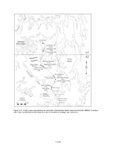
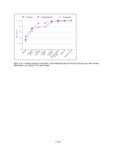
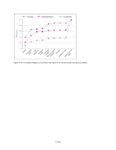
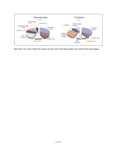
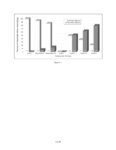
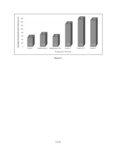
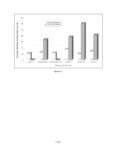
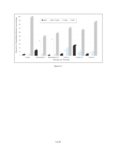
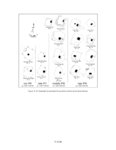
Show midden deposits. At small sites and sites with multiple floor assemblages we identified sherds that came from the same broken vessel but were deposited in separate locations. Sherds that go together can then be used to temporally link the deposits and features they came from. Ceramic Technology Finding out where, when, how, and to some extent why pottery was made in the project area contributes to understanding environment, exchange, and ethnicity. Environment and technology are linked by the process of selecting pottery materials from available clays and nonplastic materials (temper). Exchange enters the equation because the materials used to make pottery can often be sourced, allowing us to track the movement of vessels, and sometimes of raw materials. Technology provides clues about ethnicity and cultural affiliation because pottery making has often been characterized as a conservative technology in that forming and firing techniques, and preferences for certain materials and forms, are passed down across generations (Rice 1987:461-464). Variability in ceramic technology is no longer considered to be simply a reflection of ethnicity-that is, the way certain patterns and preferences are handed down from generation to generation within regionally defined communities. Potters selected clays and tempers partly on the basis of availability and tradition, but also as a response to what worked best to make pots intended for particular functions. Likewise, techniques of forming, finishing, firing, and even decorating vessels are not matters of rote learning of "traditions." Rather, these techniques were developed to serve certain needs within the constraints imposed by available materials. We therefore wish to understand the production and use of pots as a system of ceramic technology before we discuss what vessel shape and decoration might tell us about ethnicity, exchange, and other social and economic relationships among people. We address the following specific research questions in the ceramic chapters: 1. Why do Kayenta Anasazi sites of the Pueblo II-III periods always have two dominant decorated wares-Tsegi Orange Ware and Tusayan White Ware? These two wares are technologically and stylistically distinct even though they were made in approximately the same vessel forms and sizes (although the variability in vessel form is itself a research question). 2. How is the development over time of fine-paste whiteware (for example, Kayenta Black-on-white, ash-tempered Tusayan Black-on-white) technologically linked to craft specialization, trade, and differential recycling of broken whiteware vessels into tools such as ceramic knives (Geib and Callahan 1988)? 3. Does the appearance of Rainbow Gray in the late Pueblo III period represent a locally developed new technology for the production of cooking vessels (Callahan and Fairley 1983; Fairley and Callahan 1985)? To answer these questions, we focused on making plausible matches between pottery and raw materials, the distribution of raw materials on the landscape, and evidence for pottery production localities and techniques. Once the sources of materials are understood, it is important to ask why some materials were used to make certain vessel forms, and why some vessels were locally produced and others were imported. An analysis of the performance characteristics of various materials and vessel forms logically follows. Which materials were suitable for making pottery that could be used in different ways? For example, what is the vitrification point of different clays? Which tempers provide resistance to thermal shock? What is the effect of clay and temper selection on resistance to abrasion? These features are relevant in selecting materials to make cooking vessels. What is the porosity of various kinds of pottery? Porosity increases resistance to thermal shock, but also decreases resistance to abrasion. High porosity increases water seepage and so decreases thermal efficiency (Schiffer 1990; Schiffer and Skibo 1987). High porosity may be desirable in a water storage vessel when one wishes to keep the water cool by evaporation, but causes more water loss than a less porous vessel. Research on N16 ceramic performance characteristics combines original experiments with local materials and forms, consultation with others performing similar experiments for other projects, and review of the available literature. Comparisons of hardness and porosity on Rainbow Gray and Tusayan Gray Ware sherds provide some clues about whether Rainbow Gray vessels were more technologically advanced over previous cooking vessels in terms of performance characteristics. Comparisons of hardness and strength between ash-tempered and sand-tempered Tusayan Black-on-white sherds demonstrate that ash-tempered whiteware is stronger and thus better suited to transport over long distances. Comparisons between Tusayan White Ware and Tsegi Orange Ware were made for the same reasons. Associations between tempers and thermal shock were not studied directly but we examined the available literature on the topic. Once we understand the origin of materials, the criteria for selection of certain materials, and the V.2.2 |