| OCR Text |
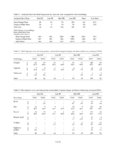
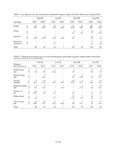
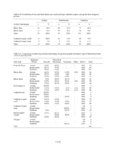
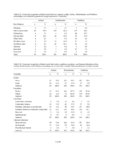
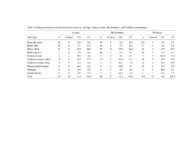
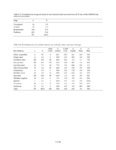
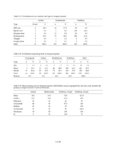
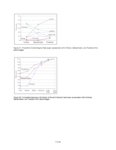
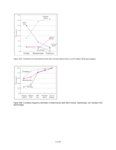
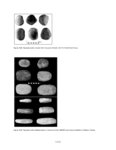
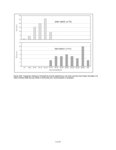
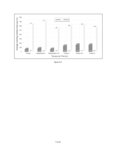
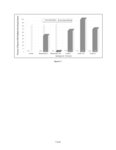
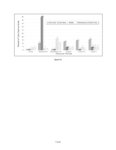
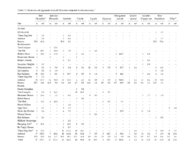
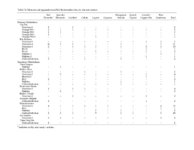
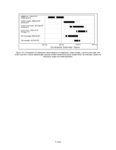
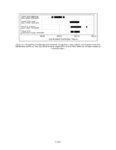
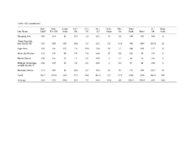
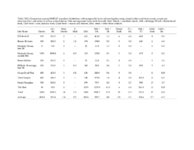
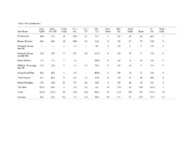
Show does the Basketmaker assemblage appear midway in technology between hunter-gatherers and farmers, rather than simply being the same as that of Puebloan farmers? Were Basketmakers transitional in residential mobility and if so how was this accomplished given their evident heavy reliance on maize? Certainly one of the reasons that Basketmaker assemblages appear less like Puebloan ones is the continued reliance on the production of percussion-thinned dart points and knives. The switch to arrow point manufacture alone during Basketmaker III and the attendant loss of biface reduction debris could explain much of the reason for why a Basketmaker II assemblage differs in reduction technology from a Puebloan one. Nelson (1994) reached a similar conclusion while comparing Basketmaker II, Basketmaker III, and Puebloan lithic assemblages from Cedar Mesa. Just as Basketmaker flake technology appears to be intermediate between Archaic and Puebloan, so too for mano size, in both length and use-surface area. As with reduction technology, the "in-betweenness" of Basketmaker mano size has little or nothing to say about the "transitional" nature of Basketmaker maize reliance. They relied on maize almost to the exact same extent as Puebloan farmers but did so with less than half the grinding surface area, let alone mealing bins and staged processing. The interesting question is how so? How did they process and consume so much maize lacking the grinding kits of later Puebloans? It certainly wasn't true that they spent all their time at inefficient grinding, as the beautiful large baskets and twined bags produced in Basketmaker times indicate otherwise. Adams (1997) seems right to emphasize that increasing mano size in Puebloan times was in large part a response to increased fine processing of maize kernels into flour, perhaps more driven by ceremonial needs than by efficiency and nutrient extraction. When considering how reduced residential mobility affected lithic assemblages it is also worth considering which gender accounts for the majority of lithic reduction debris at settlements and how this aspect might have changed through time or at the types of sites that are routinely sampled and compared. We have long believed, like Sassaman (1998:159) has argued, that much of the debitage at Puebloan habitations is the byproduct of female activity, something that may not be true for Archaic base camps. Since the ethnographic record reveals that women invariable were the producers of grinding tools in the Puebloan Southwest (see review in Chapter 6), this is just one indication of the extent of female contribution to the debris that accumulates at habitations. The fabrication, use, and refurbishing of pecking stones used in manos and metate production and maintenance is another significant contributor to habitation refuse. Add to this the countless other household and food preparation tasks of women for which stone tools were needed and it becomes easy to appreciate how the stone flaking debris and overall lithic assemblages of habitations are in no small part the accumulation of female activities. Lithic assemblages were determined by the tasks that men and women performed, and both the nature and intensity of these tasks probably changed as mobility patterns changed and perhaps as well the spatial association between the debris produced by men and women. Sassaman (1998:159) proposed that sedentism led to increased contributions to the archaeological record by women as they assumed a primary role in domestic tasks. We agree with the underlying root cause-increased sedentism as a result of food production-but believe that women's role in domestic tasks did not increase since they were always significantly invested and involved in the production and use of stone tools. Rather the visibility of their contribution to the archaeological record commonly studied by archaeologists-residential sites- increased at the same time that the male contribution to residential assemblages was declining, or at least that portion directed at biface reduction. In a foraging strategy of high residential mobility, all members of family groups had incentive to emphasize the transportability of tool kits. Staying put in one or two places for major portions of the year, "tethered" to agricultural fields and winter food stores may well have lifted the weight/bulk constraint for some aspects of technology. With transportability no longer an issue, the size and bulk of female tool kits, including pecking stones and manos, likely increased. That along with the stockpiling of cores for detaching flakes as needed for expedient use would have increased the proportion and size of reduction debris that accumulated at residential locations, especially core reduction flakes. At the same time, the spatial locations of debris from tool production became increasingly separated in space since male logistic mobility was likely increasing as overall female mobility declined. Shifting the loci of male production of hunting weapons away from residential "village" sites, and therefore away from the contexts most commonly studied by archaeologists, would have further led to habitation assemblages dominated by the debris of female activities (Lowell 1991:460). That this was not always the case is evidenced by the assemblage from Three Dog Site with its abundance of arrow points and bifacial reduction flakes. Still, the flake waste and other remains from Dust Devil Cave reveal that this site, which in the early Archaic had functioned as a residential base, had become a hunting camp with abundant biface debris, which did not accumulate at any of the habitations that the hunters originated from. V.5.42 |