| OCR Text |
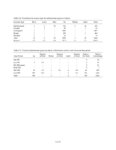
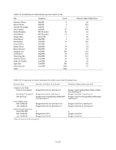
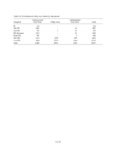
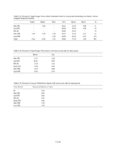
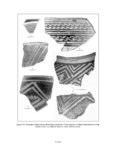
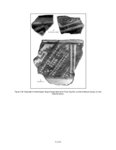
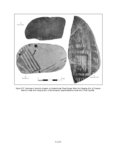
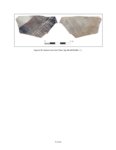
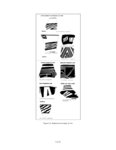
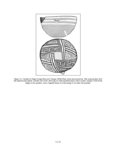
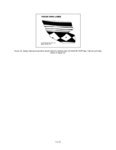
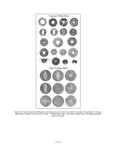
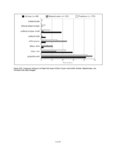
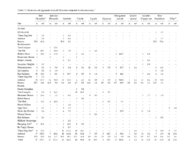
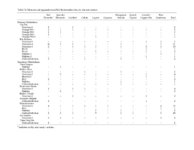
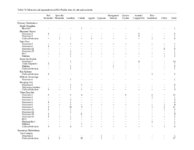
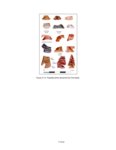
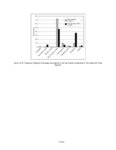
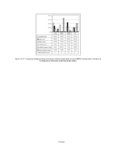
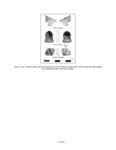
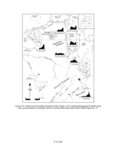
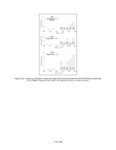
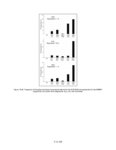
Show from Beals et al.'s mortuary assemblages that some Pueblo III orangeware was produced in the south, at least near Kayenta (Beals et al. 1945), at Long House (where two unfired polychrome bowls were recovered with a burial, notes on file at MNA), and possibly also elsewhere in Long House Valley and Tsegi Canyon. Excavational evidence shows fairly certainly that the Kayenta orange-ware and white-ware series were concurrent pottery traditions, at least during Pueblo III. Not only were they made in the same villages, but they seem often to have been made by the same potters. The extraordinary consistency of the two design traditions and the almost complete lack of any overlapping between orange- and white-ware design in Pueblo III consequently present a cultural phenomenon of unusual interest … Our own cultural tradition might suggest that the two decorated styles belong in the same category, but it is apparent that to the aboriginal inhabitants of the Tsegi region the orange and white wares occupied quite distinct categories. (Beals et al. 1945:149-150) The similarities and overlaps between vessel forms and decorative repertoires in both wares in the N16 assemblages support the conclusion of Beals et al. that at least some potters in the south made both wares. Potters living in the northern part of the Kayenta area did not practice a separate ceramic tradition, but shared the same orangeware style and technology, and had ready access to whiteware vessels from the south, and perhaps to orangeware vessels from the south as well. Style Dichotomies What were the aboriginal categories shared by potters in the Tsegi-Kayenta region? Why two decorative styles, two colors, two technologies? Why did whiteware and orangeware decorations diverge in Pueblo III from a common Pueblo II repertoire, and partly converge again in the late Pueblo III types, Kiet Siel Black-on-red and Polychrome? This pattern might be partly explained by increasing craft specialization in highly labor intensive, ash-tempered whiteware vessels in a few areas along the flanks of Black Mesa, expedient orangeware production in the Navajo Mountain area, and a mixed tradition in the Tsegi Canyon-Long House Valley-Shonto Plateau area, but this only accounts for the fact of divergence, not the particular styles and design content. To understand the particular form and content of pottery decoration, it is necessary to consider vessel form, and to compare pottery design with other decorated media, in this case textiles and basketry. The difference between orangeware and whiteware must be at least partly about vessel form. Although bowls, jars, pitchers, and ladles were made in both wares, bowl forms dominate the orangeware assemblage in all time periods represented in the study area, and jar forms dominate whiteware assemblages. This pattern also appears in the Cibola tradition, starting in the late Pueblo II period and persisting through Pueblo IV; decorated pottery assemblages are dominated by Cibola White Ware jars and White Mountain Red Ware bowls. In the Puerco Valley region, such as the ChambersSanders Trust Lands, Little Colorado White Ware and Cibola White Ware appear as both bowls and jars in late Pueblo II through Pueblo III assemblages, but Showlow Black-on-red vessels are primarily bowls and ladles. In the Mesa Verde area, redware bowls were far more frequent than jars as early as Pueblo I times, but whiteware does not appear to be biased toward jars, as whiteware bowls are very frequent (S. Ortman, personal communication 2005). To my knowledge, Pueblo IV period Rio Grande traditions do not conform to this pattern, and Pueblo IV assemblages in the Hopi area consist of yellowware bowls with a very small proportion of orange-colored vessels that do not appear to be biased in favor of a particular form. In short, the whiteware jar/redware bowl pattern appears to span the western pueblo region and to last over a century, but disappears after 1300 and perhaps somewhat earlier. These associations of vessel color and form probably have no instrumental, functional advantage. Performance characteristics (technological attributes that affect how well a vessel works for intended functions) are probably very similar. Whiteware and orangeware bowls of the same size and shape probably functioned equally well as containers. Whiteware vessels might be more durable and less porous, orangeware vessels might have been more widely manufactured than whiteware, and their differing firing techniques might have required different fuels and facilities. But these factors do not account for stylistic differences nor for correlations among style of painted decoration, color, and vessel form. The explanation must be sought in social or symbolic factors. Color and vessel shape are the most highly visible attributes of ceramic vessels. Painted decoration, particularly in bowl interiors, would be visible only to those viewing a vessel close up, straight on, and when the bowl was empty. Color and shape can be seen at a distance, by those outside the household unit. Color might signal social contexts of use, such as household meal versus public feast, or might facilitate reciprocal exchanges between dual social groups, such as moieties, kiva groups, or even gender groups. None of these possibilities is supported by Pueblo ethnography, but Pueblo culture has changed a great deal over the centuries. It seems more likely to me that these patterns had social functions, V.3.8 |