| OCR Text |
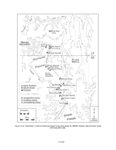
Show Geologic Origin of the Blue Canyon Ash The geologic origin of the Blue Canyon ash deposit does not bear directly on the present research question, that of ceramic production and exchange systems in the Kayenta region. The prehistoric potters probably did not care where the ash they added to clay came from; they cared only that the ceramics produced with the ash had certain desirable characteristics that made them functional and valuable as trade goods. Prehistoric potters probably used volcanic ash from any source available to them, emphasizing the closest or easiest to access. Given that ceramic vessels containing high-FeO or low-FeO ash are indistinguishable based visual attributes such as vessel form or design style, all ash was probably considered of equal value or utility, regardless of its ultimate origin. Because more than one volcanic ash source was used, however, the geologic origin of the Blue Canyon ash and the high-FeO ash becomes an issue of interest to archaeologists. In trying to predict where ash deposits might occur outside of Blue Canyon, the original geologic source of the material is quite relevant. The San Francisco volcanic field, which produced abundant quantities of felsic volcanic rock during several eruptive episodes, was initially considered a potential source. The earliest igneous material produced by this volcanic field comprises a series of basalt flows, dating between 10 and 4 million years ago, that cover much of the area between Flagstaff and the Verde Valley (Nations and Stump 1981:168). During the past 3 million years, the volcanic field produced both rhyolitic and basaltic rock, and the San Francisco Peaks are a composite cone of andesitic to rhyolitic composition. In a study of pumice and tuff deposits near Sugarloaf Mountain, Dennis (1981:61) reported compositional data for ash collected from Blue Canyon, and tentatively suggested that the material might relate to pumice deposits erupted from the Fremont Dome, northeast of the San Francisco Peaks. Although the bulk compositions reported by Dennis (1981: Table 5) for the Blue Canyon ash and the pumice are similar, there are important differences in magnesium, calcium, sodium, and several trace elements. Most felsic volcanic materials are similar in major element composition, so close matches in minor and trace elements are important in assigning provenience. Dennis's (1981:54) data came from analyses by individuals at several institutions using different techniques, which may explain some of the variation in his results. We think that the more cohesive electron microprobe data from our study indicate that the Blue Canyon ash is both visually and compositionally distinct from pumice and tuff deposits studied by Dennis.2 Another problem with proposing the San Francisco volcanic field as a source for the Blue Canyon ash is the lack of evidence for a significant volume of material from the eruption, and particularly the absence of known deposits between the source area and Blue Canyon. Given the relatively recent age of the Fremont Dome eruption (less than a million years), massive erosion of intervening deposits seems unlikely. We next considered that the ash deposits in Blue Canyon derive from an extraregional source. Extremely large eruptions, producing huge amounts of felsic volcanic tephra, have occurred numerous times in the western United States, and thick ash deposits can be found many hundreds of miles from the source vent (Izett et al. 1970, 1988; Sarna-Wojcicki et al. 1980). A sample of the Blue Canyon ash was submitted to Dr. Andrei Sarna-Wojcicki of the USGS for ICP analysis and comparison with known volcanic ash sources across the western United States. His data (personal communication, 2001) indicate that the Long Valley-Glass Mountain volcanic field in eastern California is the most likely source of the ash collected from Blue Canyon. The immense quantity of rhyolitic ash erupted from this source, designated the Bishop ash, covered "more than a million square kilometers of the Western United States" (Izett et al. 1988:3). Ash correlated to this eruption has been reported as far away as central Nebraska and southern New Mexico (Izett et al. 1988: Figure 1); the area includes virtually all of Arizona. By the late 1990s, no Bishop ash deposits were known in northern Arizona but a thick deposit was identified in the Verde Valley in 2000 (Kirk Anderson, personal communication, 2001). That deposit is nearly 1.5 m thick, only slightly less than the Blue Canyon ash bed. Thick tuff beds in the vicinity of the eruption that produced the Bishop ash contain a diagnostic suite of mineral inclusions (Izett et al. 1988), which gradually become depleted as heavier minerals drop out during long-distance air transport. The limited assemblage of mineral inclusions noted in the Blue Canyon ash would be expected for ash deposited more than 800 km from the source. The dark monoclinic minerals in the Blue Canyon ash are probably residual phenocrysts, and the tentative identification of this material as allanite is partially based on its prevalence in the Bishop ash elsewhere (Izett et al. 1988). A 2 Our 2002 analysis included a tephra sample from the Pumice Pits, a few miles north of Fremont Dome, also included in Dennis's (1981) study. This material was quite distinct from both the low-FeO and high-FeO ash in our ceramic samples and the blue Canyon volcanic ash. V.4.12 |