| OCR Text |
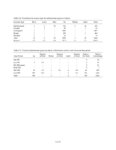
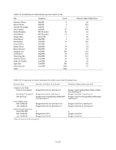
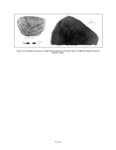
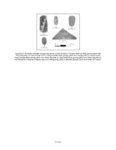
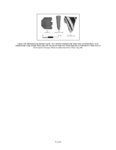
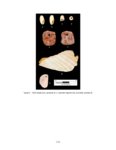
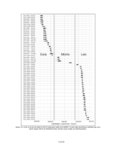
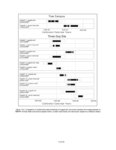
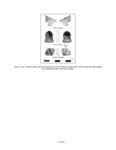
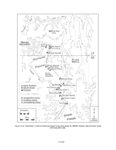
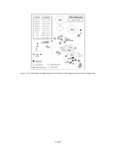
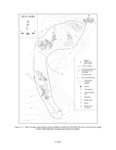
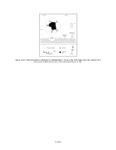
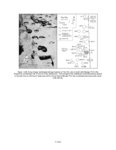
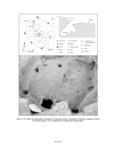
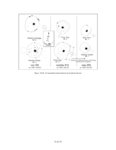
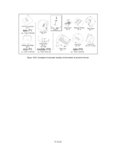
Show Basketmaker II and early Archaic (Desha Complex) accumulation (Lindsay et al. 1968:35). The presence of a Gypsum point at the site (Lindsay et al. 1968: Figure 23w) hints at some late Archaic use, as does the recovery of mountain sheep hyoid bone pendants (Lindsay et al. 1968: Figure 36n, o, 59-60). The latter artifacts, which are highly distinctive, were assigned to the Desha Complex, but stratigraphically controlled excavations at Cowboy Cave also recovered examples of hyoid bone pendants from late Archaic layers (Lucius 1980:100; Figure 42). The secure recovery context at Cowboy Cave makes it highly probable that the pair of hyoid bone pendants from Sand Dune Cave also belong to the late Archaic. One further piece of evidence is provided by the direct dating of collagen from Burial 2, which produced a date of 4480 ± 60 BP (Coltrain et al. 2007:316). With these hints, a viable reinterpretation of the stratigraphy at this site is that Stratum V actually represents late Archaic deposits overlain and partially intermingled with subsequent Basketmaker II deposits, rather than being a composite of early Archaic (Desha Compex) and Basketmaker II as claimed. In such a scenario, Stratum III would represent deposition during the early Archaic associated with the Desha Complex and not pre-Desha as claimed in the excavation report (Lindsay et al. 1968:36). Likewise, Stratum IV would represent a largely sterile middle Holocene deposit of eolian sand like Stratum V at Dust Devil Cave. Late Archaic deposition at the site is represented by the lower portion of Stratum V, but the subsequent and intensive Basketmaker II use of the site and the creation of numerous cists greatly intermingled the pure forager deposit with the accumulation of these early farmers. Direct dating of specific remains would help to reveal the extent of the hidden late Archaic component and the validity of this reinterpretation. Key in this regard would be the single-rod basketry, fur cordage, and various types of fiber cordage. Direct dating of remains might well reveal that the cave was little used during the late Archaic and if so then it is reasonable to ponder why this was the case, given the common presence of foragers in the area. Was the confined space of this shelter too little for the late Archaic social groups who occupied the region? Although speculative, one possible pattern is an early to late Archaic shift in elevation zones favored for residential bases from shrub grasslands to pinyon-juniper uplands. Examples of early Archaic residential camps were not revealed in the NMRAP site sample although there were examples of early Archaic hunting and processing camps. The early Archaic residential bases known in the project area are all caves: Dust Devil at the lowest elevation (ca. 1494 m), Sand Dune at somewhat higher elevation (1780 m), and Atlatl Rock Cave at the highest elevation (1978). Dust Devil Cave is well within a shrub-grassland environment, some 5 km or more from the lower fringe of pinyon-juniper forest. This site saw rather intensive early Archaic occupation resulting in roughly 1 m of rich cultural deposition (Ambler 1996; Lindsay et al. 1968). Both of the higher elevation caves saw more limited early Archaic use as revealed by cultural layers reaching a maximum of 15 cm thick. The NMRAP excavations documented the presence of residential sites around the foot of Navajo Mountain and Sand Dune Cave that might also have had a late Archaic residential use. Dust Devil Cave, however, evidently had minimal late Archaic occupation. Environmental change and corresponding shifts in geographic distributions of key plants such as pinyon and grasses during the long Archaic sequence might have been responsible for this tentative pattern, if it holds up to further excavation data. The environment around Dust Devil Cave that was evidently so desirable during the early Archaic seems to have lost favor by the late Archaic, perhaps as a result of Holocene drying. Subsistence Range and Territory Given a study area of relatively small size such as that covered by the Navajo Mountain road, it is easy to envision that the Archaic remains excavated with the ROW for any synchronous slice represent those of a single forager group or band. After all, the linear distance of the N16 ROW is only 43 km and it includes just portions of two small plateaus (Rainbow and Shonto). Ethnographic data for huntergatherers living in the Great Basin and the Southwest indicate that annual subsistence territories easily exceed this distance, often greatly so (Kelley 1995: Table 4-1). In a Southwest example, Gifford (1936:254) reported that the northern Yavapai procurement range had a linear distance of more than 100 km north to south. A similar range can be inferred from Kelly's (1964) data on the Kaibab Band of the Southern Paiute. Consequently, one is tempted to try to interpret the excavated NMRAP Archaic remains as parts of a single differentiated system. But what if the sample contains mixed portions of two or more different settlement systems? Paynter (1983:254) has considered this possibility from two perspectives: (1) that the region under investigation contains only part of a complete settlement system, and (2) that it contains portions drawn from several different systems. I can readily accept, based on the nature of the environment coupled with ethnographic accounts of foragers for the Southwest, that the N16 project area may not have sustained populations on a yearly basis. In order to survive, Archaic foragers likely had to operate on a V.13.43 |