| OCR Text |
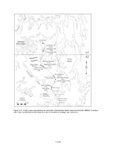
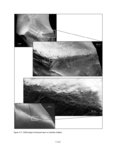
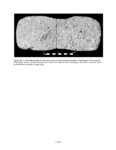
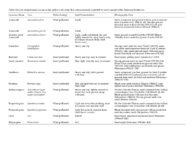
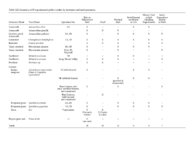
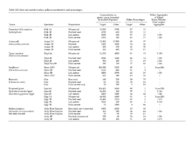
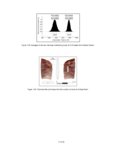
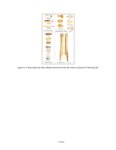
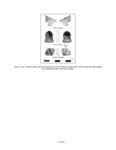
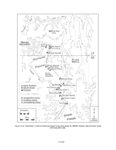
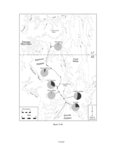
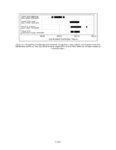
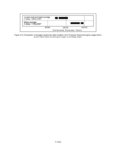
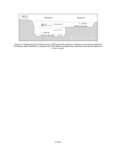
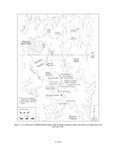
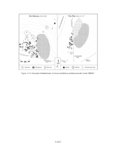
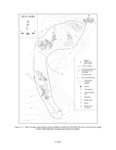
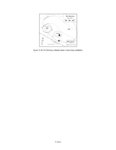
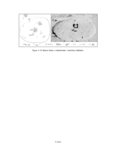
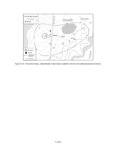
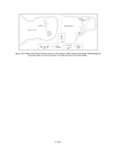
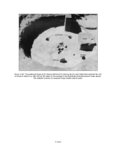
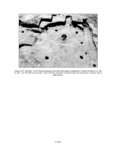
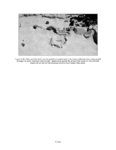
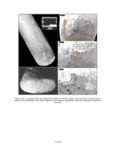
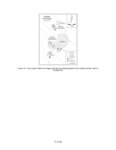
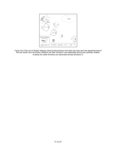
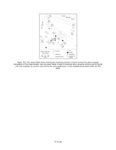
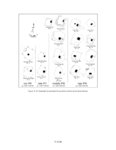
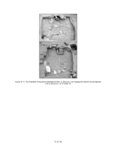
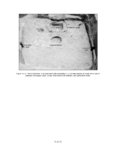
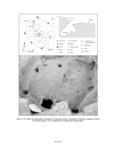
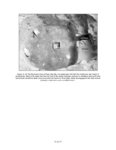
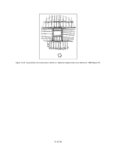
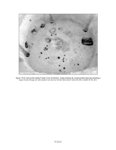
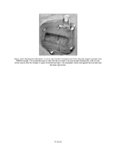
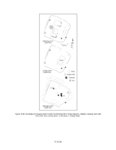
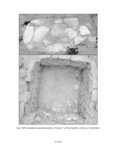
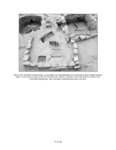
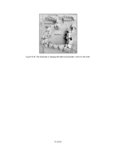
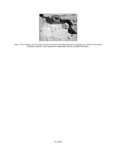
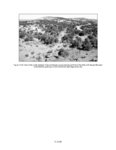
Show seemed well suited to tending fields and the recovered macrobotanical remains are consistent with such an inference. The structure at this component was a roughly square room with a floor area of 4.2 sq m, which is small compared to the average for living rooms at primary habitations. The room lacked a hearth; interior features were limited to postholes and two shallow pits. The lower walls of the structure were created by excavating 70 cm below the prehistoric occupation surface, including cutting 32 cm into sandstone bedrock, no easy task without metal picks (Figure 15.39). The lack of storage features or an interior hearth is consistent with seasonal occupancy, yet despite this the effort represented in construction would seem to imply some degree of building for anticipated long-term use, even though the intended interval of occupancy was seasonal. Greater investment in the architecture of field houses might be related to greater emphasis on the control of field ownership, as argued by Kohler (1992), which on the Rainbow Plateau could have become an important issue after AD 1200 as the Anasazi population was reaching toward an all-time high and large villages began to form. There is clearly an abundance of sites resembling field houses on the Rainbow Plateau that are ceramically dated to the middle to late Pueblo III interval. Dry farming in the thirteenth century may have been a risky business, and quite variable (see Dean 1988a, b; Dean et al. 1985) such that it might have benefited families to have diverse field settings to take advantage of microclimatic fluctuations, soil conditions, and changing social responsibilities or networks. The consolidation of the population into large villages meant that farmers had to travel farther to their fields than previously when habitations were scattered and adjacent to farm parcels. This alone could increase the number of field houses but not necessarily how they were constructed-greater labor investment, increased longevity/durability of construction-which seems more in line with Kohler's argument about marking field ownership or use-rights. Modesty House like most of the NMRAP secondary habitations appears analogous to Russell's (1978) description of Navajo field houses, in that they are situated in proximity to farmable land in the form of drainages, basins, and sandy flats and are often located on adjacent higher slopes or rises about 1-3 m above the surrounding landscapes. In some cases the potential field association is obvious, such as at Hillside Hermitage, Mouse House, and Kin Kahuna, which are within 100 m of currently used Navajo fields along a drainage, settings also likely farmed 1000 years earlier (this is the same setting of the Basketmaker II habitation of Kin Kahuna which was first settled shortly after 400 cal. BC). Other sites such as Dune Hollow, Modesty House, and Bonsai Bivouac are located in the sagebrush flats of the central Rainbow Plateau; these settings were likely dry-farmed like Navajos continue to do today although currently in use fields are not close at hand to the sites in question. UT-B-63-19 is situated in the flats at the foot of Navajo Mountain in a similar setting-one potentially farmed but without a close-by currently in use field. But not all of the sites are within 100 m of obvious arable land, with three on the divide between Navajo and Piute Canyons being obvious examples-Naaki Hooghan, The Slots, and Tres Campos. Camp Dead Pine would also seem to fit this scenario though it is situated closer to the southeast edge of the Rainbow Plateau where there are areas that appear more conducive to farming. Were They All Field Houses? Propinquity to some resource or environment is potentially shaky ground for assignment of site function, but it provides the principal piece of evidence for the field house designation. Although we are convinced that sites like Naaki Hooghan were occupied seasonally, their role within an overall settlement-subsistence system is somewhat enigmatic. A seasonal habitation associated with field tending seems unlikely given the apparent lack of obvious arable land within the immediate vicinity. As just mentioned, this site along with The Slots and Tres Campos is situated on the divide between Piute and Navajo Canyons; indeed all three are situated within several hundred meters of one another. With little soil and large slickrock exposures (Figure 15.40), this divide seems an unlikely setting for agricultural fields. Indeed, the forested upland appears better suited to foraging and hunting and the divide provides a natural travel corridor between the Rainbow and Shonto Plateaus. There are currently no Navajo fields anywhere along this divide. It is worth mentioning that numerous Basketmaker II secondary habitations are also located along this divide around the three Puebloan sites considered here (see discussion in previous chapter). Settlement patterns of course may have changed between Basketmaker II and Pueblo II, but still it is worth considering what might have been the potential commonality. Prime farm land is located not too far away in upper Piute Canyon where deep alluvium coincides with abundant flowing water from springs for irrigation or sub-irrigation farming. To efficiently exploit canyon summer farming, camps should be located within the canyon proper rather than several kilometers away and more than 200 m higher in elevation. Furthermore, there are many primary residential settlements in Piute Canyon, perhaps obviating the need for any field houses in the canyon, and certainly not those located on the canyon rim. Although the presence of in-use or recently used fields certainly colors our perceptions of where farming is practicable and encourages a field house designation for secondary habitations adjacent to V.15.45 |