| OCR Text |
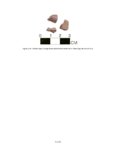
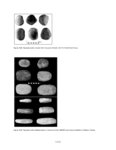
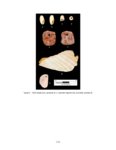
Show functional constraints operating on vessel form, we can examine the techniques by which vessels were formed, fired, and decorated. A link between technology and ethnicity operates here, because pottery making is a complicated system of cultural knowledge that is passed along from generation to generation. Making successful changes in materials and techniques requires a great deal of experimentation. Pottery in the Kayenta area is known to have been formed by coiling, and thinned by scraping (Colton and Hargrave 1937; Roberts 2001). Early on, surfaces were plain or lightly polished. Starting in the Pueblo I-II periods, surface treatments included polishing, and sometimes slipping, of decorated vessels, and textured necks for utility jars. All-over corrugation of utility vessels, and occasional corrugated exteriors on whiteware bowls, began around AD 1030-1050, in the Pueblo II period. Potters throughout the Anasazi region seem to have shared these techniques. Other features, such as methods of shaping rims and of attaching handles, may have more restricted distributions in time and space that will help us identify technological traditions with narrower distributions. In many parts of the Anasazi region, at least two methods of firing pottery were used in the same time periods. White and grayware pottery was fired in an oxygen-excluding atmosphere (sometimes called "reducing" or "neutral"). Orange, red, and yellow ware pottery was fired in an oxygen-rich atmosphere ("oxidizing"). Choices of firing technology distinguish production of white and orange decorated pottery in the Kayenta area during the Pueblo II and III periods. Availability of clays with different iron contents does not explain the dichotomy because temper, firing technique, and decorative styles also differ across wares, but Beals et al. (1945) concluded that the two technologies were probably practiced by the same potters in the Kayenta region. Some researchers have concluded that the two wares represent the work of different potters in the same communities or of potters from different communities who exchanged whiteware for orangeware, and vice versa (Ambler 1983). It is also possible that fuels constrain the choice of firing technique, that firing technique affects vessel performance characteristics, and that social and ideological factors play a large role in explaining the color dichotomy. Techniques for decorating vessels were largely shared over the Kayenta region. Black organic paint appears on whiteware. Black-on-orange and black-on-red ceramics have iron/manganese-based paint. Orange polychrome vessels have mineral (limonite/goethite and hematite) red and sometimes white (kaolin?) decoration as well. There are, however, variations. Gallagher (1986) reported finding small amounts of Tusayan White Ware decorated with mineral black paint on the Black Mesa Railroad Corridor, but no descriptions were published. We noted no mineral-painted whiteware pottery in the N16 study area, and no organic-painted redware. All of these questions are very important in assessing the degree of technological homogeneity or diversity in the Kayenta ceramic tradition, and the spatial distribution of different technological and decorative systems. It is necessary to find out where and when certain pottery materials and techniques were actually used and which materials and techniques tend to coincide before we can discuss the meaning of the patterns we see in social and economic terms. A final question about ceramic technology concerns the reuse or recycling of broken pottery to make tools and other items of various kinds. Such reuse appears to have increased over time in the project area, and later we will explore some possible reasons for this increase. In addition, it has often been noted that some kinds of pottery were favored over others for reuse as sherd tools (Oppelt 1984:3; Stein 1966). That is, more whiteware sherds were modified for tools, gaming pieces, pendants, and so on, than would be expected if sherds to be modified were randomly selected from available sherds in contemporaneous midden deposits. The fineness and hardness of whiteware paste compared to coarser grayware and softer redware probably accounts for differential selection of whiteware for making sherd tools. In the late Pueblo III period, this pattern was even more pronounced, and certain fine-paste whiteware sherds actually appear to have been used as cutting implements (Geib and Callahan 1988). This is an interesting instance of hybridization of lithic and ceramic technology. Form and Function Vessel form, ceramic use-wear, and residues on ceramic vessels provide clues about food processing and storage at N16 sites. We examine the distribution of vessel forms in time and space among sites, and the degree of formal variation across time and according to site size and functional information derived from other data classes (architecture, plant and animal remains, stone artifacts). Assemblage variety should reflect the range of many subsistence-related activities that took place at each site. Assemblage variety increases according to the number of vessels discarded, and hence, the length of occupation (Mills 1989b). Fortunately, most of the primary habitation sites in the study area apparently were occupied for only a generation or less, and comparisons are fairly straightforward. Within any given time interval, V.2.3 |