| OCR Text |
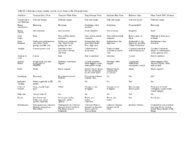
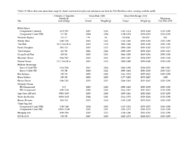
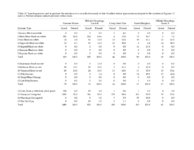
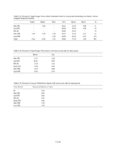
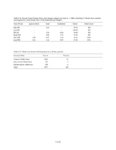
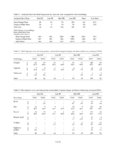
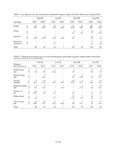
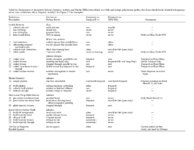
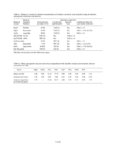
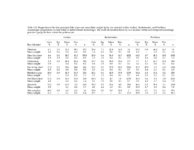
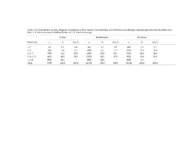
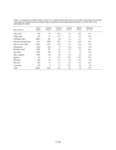
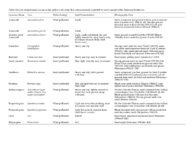
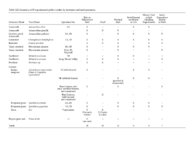
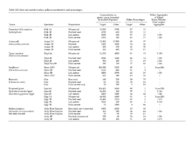
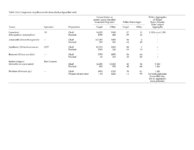
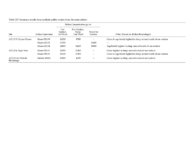
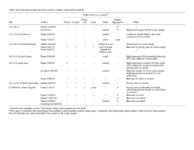
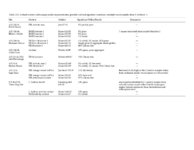
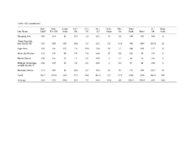
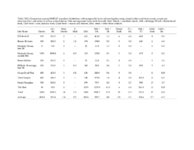
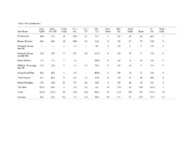
Show differentiated rooms (living and mealing), is just 7.2 sq m. In our opinion, Powell's expectation that summer habitation sites could have more exterior and total site space than winter habitation sites is suspect on several grounds and indeed we would anticipate just the opposite pattern. Longer duration of use, larger group size, and greater activity diversity at primary habitations should result in larger scatters of remains (greater exterior site areas) than comparatively briefly occupied and more task-specific field houses. The issue has to do with the visibility of remains in the archaeological record; those at a primary residence cover more area than those at a secondary residence in almost all cases. This said, Powell's expectation didn't pan out for Anasazi sites: "The pattern of occurrence of exterior area on sites was counter to the expectations … sites with great amounts of interior area also[tend] to have large amounts of exterior space" (1983:111). Plog (1986:192-193) disputed what he called Powell's suggestion that "winter-occupied dwellings tend to be larger than summeroccupied dwellings," citing mean sizes for winter homesteads (17.3 sq m) and sheep camps (13.8 sq m) that are comparable with that of summer field houses. On the other hand, his average size of homesteads occupied year round (25.5 sq m) was, interestingly, nearly identical with the figure Powell used to demarcate summer field sites from other site types. Powell's expected pattern for site location, defined as winter sites having proximity to hunted and gathered resources (uplands) and summer sites having proximity to potential farm parcels (lowlands) proved wrong, but then the expectation was too simplistic to start with and extension of the underlying Pai ethnographic model to the Black Mesa Anasazi case is dubious. As Powell (1983:42-43) herself has observed, the upland/lowland dichotomy was poorly defined and any site on the BMAP lease is within a few hundred meters of both zones. That issue aside, the economics of food movement alone (Barlow and Metcalf 1996; Jones and Madsen 1989; Rhode 1990) suggest that primary habitations will be located next to the bulky and comparative low-return resources of fields (this includes maize; Barlow 2002) with highreturn resources such as hunted game and pinyon nuts transported as needed to the residential sites. In other words, there would be no reason to locate a winter residential site into the uplands to be near pinyon nuts and game especially in a setting where these "uplands" are less than a few minutes' walk away. Unless there is some critical compelling reason otherwise, such as need for a defendable location, residential sites should be situated next to food resources that are bulky relative to their net energy gain or to patches that provide such resources when these constitute a spatially and temporally predictable source. In this context it is worth recalling Bradfield's (1971:22) observations about maize transportation at Hopi, where 120-144 bushels of corn per household had to be moved annually from the field to the village: "given … the size of crop required by each household, the physical labor of carrying in that weight of corn (on the cob) must … have precluded the use of any considerable acreage of farm land sited more than four miles from the parent village." If two adults transported this amount from fields 4 miles distant, for example, it would take at least 6 weeks to bring in the harvest. Perhaps not coincidently, the 4mile radius essentially delimited the historic "clan lands" of Old Oraibi. Although he perhaps grossly underestimates how much weight an adult male can carry daily over long distances (Malville 2001), his insights are probably generally right. More important, his observations and conclusions can be turned on their head and applied in the other direction to the earlier periods of Puebloan prehistory: villages would not be sited more than 4 miles from the primary fields so as to reduce the transport of heavy low-return resources, and maize is low-return despite accounting for a large proportion of the daily calories (see Barlow 2002). The returns on pinyon are so much higher than for maize and it is so much more nutrient dense that it could easily be transported great distances to residences situated next to abundant lowreturn resources. This is one of Barlow and Metcalf's (1996) main points, which is easily extended to the situation of Puebloan farmers who lived close to their maize fields but traveled far and wide for pinyon nuts and deer. The tethering of habitations to productive field locations makes great sense in the Pueblo I and Pueblo II period that Powell considered since there were no compelling reasons for settlement in just a few select locations away from fields as was true at Hopi, whether for social factors or mutual defense. Powell (1983:79) examined the frequently used assumption that hearth location indicates the season of occupation. For example, "hearths will be located out-of-doors in the summer to avoid overheating shelter interiors." In her comparison, none of the Black Mesa pinyon camps had exterior hearths (all had a single interior hearth), but 60 percent of the field houses had exterior hearths. Her conclusion that "fallwinter sites are characterized by interior hearths, whereas spring-summer sites are characterized by exterior hearths" (Powell 1983:81) is perhaps a tad simplistic. Indeed, 67 percent of the summer Navajo field houses examined by Powell (1983: Table 15) had interior hearths. Since field house use can range from late spring through early fall; regarding them as "summer" residences is perhaps misleading. Climatological data from the Coppermine Trading Post at 6380 ft (1946 m) shows a mean minimum V.15.40 |