| OCR Text |
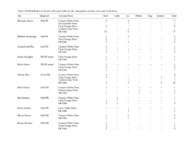
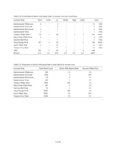
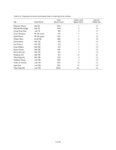
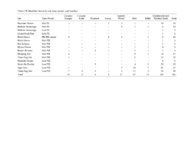
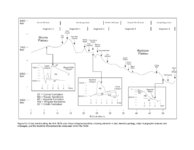
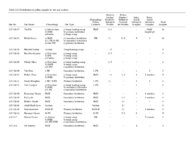
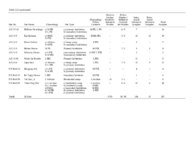
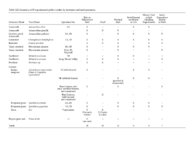
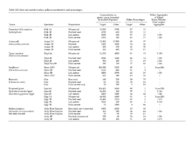
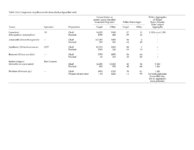
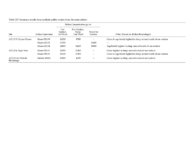
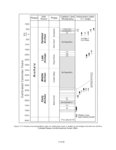
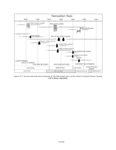
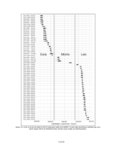
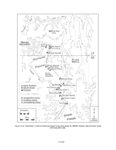
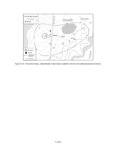
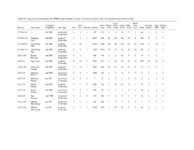
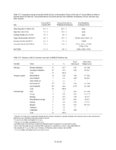
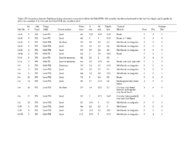
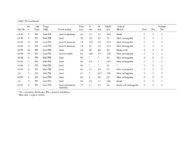
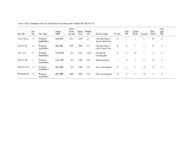
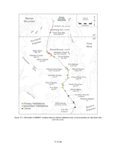
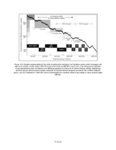
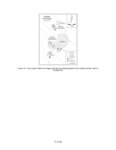
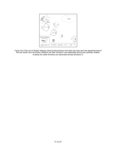
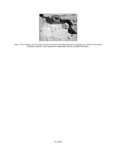
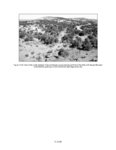
Show juniper forest but with vast exposures of Navajo Sandstone slickrock. Well-watered alluvium for farming is available within adjacent canyons, especially the upper portion of Piute Canyon. The middle portion of the ROW, from about 1800 to 1900 m, consists of the sagebrush-covered flats of the Rainbow Plateau, an area generally sparse in tree cover. Anasazi settlement of this portion would have depended upon dryfarming. The final portion of the ROW is the lowest in elevation, at about 1700-1800 m. It runs along the eastern foot of Navajo Mountain, which rises to a height of 3166 m-about 1200 m above the Rainbow Plateau. This area consists of sagebrush-filled sandy drainages separated by pinyon-juniper covered ridges that are mantled with talus boulders. Proximity to the Glen Canyon lowlands may have been an additional benefit/attraction of this setting. The 33 sites subjected to data recovery excavations for the NMRAP were a diverse lot, in both temporal placement and function. The sites ranged in age from the early Archaic, roughly 7200 cal. BC, up through the final Anasazi abandonment of the region shortly before AD 1300. Fourteen of the sites had two or more components, so in all NNAD excavated 58 components. Nineteen of the sites were single component or at least only had a single component extending into the N16 ROW. By general temporal period there were 16 Archaic sites/components, 17 Basketmaker sites/components, and 25 Puebloan sites/components. The Archaic sample mainly consisted of temporary camps, likely used briefly and for specific purposes such as hunting, plant processing, and perhaps even simple overnight stays. Several late Archaic components (two at one site) appear to have functioned as residential camps. Most of the Archaic sites date to the early portion of this period, before about 5000 cal. BC. At least five components date to the late Archaic after about 1500 cal. BC but before ca. 800 cal. BC; these sites lacked domesticates. The Basketmaker sites/components exhibited greater diversity in site function, with several primary habitations, more secondary habitations, and a few temporary camps. The Basketmaker sites all date to an interval between about 400 cal. BC (shortly thereafter) to 500 cal. AD, overlapping the introduction of pottery. One Basketmaker site with an assemblage of Obelisk Utility pottery is well dated to between cal. AD 220 and 350 and appears to represent a good example of a Basketmaker II-III transitional habitation. The numerous Puebloan sites/components included many primary habitations ranging in age from middle Pueblo II to late Pueblo III but also several secondary habitations or field houses and limited activity camps, including one from the Pueblo I period, which is virtually unknown for the Rainbow and Shonto Plateaus. The Pueblo III sites in the N16 ROW typify those that have been little studied to date, such as single or extended family habitations, some grouped closely together to form larger pit house villages. Eight of the sites were middle Pueblo III in age; these are especially important because they date to the interval just before the larger pueblos started to form in the Tsegi phase and thus are critical to understanding organizational changes leading to late Pueblo III aggregation. The NMRAP site descriptions, which provide details about artifacts and nonartifactual remains as well as the usual feature information, are organized by general temporal period, resulting in an Archaic volume (II), a Basketmaker volume (III), and a Puebloan volume (IV). Multiple-component sites are described in as many of the volumes as needed but without repeating redundant information, which is presented in full detail only once, usually with the most significant component. The descriptive volumes are each introduced with a chapter that focuses on the temporal period around which the volume is organized. This final volume presents synthetic chapters on the analyses of the various artifacts and nonartifactual remains recovered from the excavations. It also summarizes and interprets the findings by temporal period, addresses the research design, and interprets the results within the context of Kayenta Anasazi archaeology and the Colorado Plateau more generally. V.1.2 |