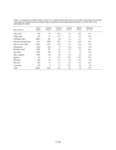
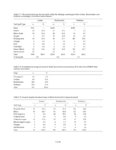
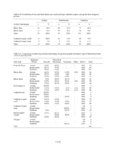
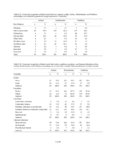
| OCR Text |
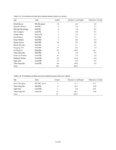
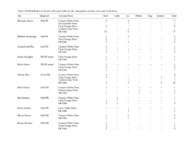
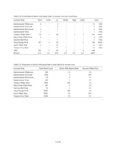
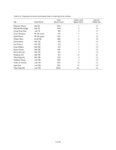
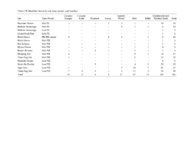
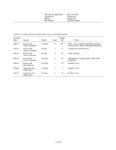
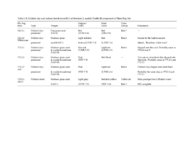
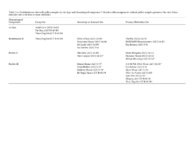
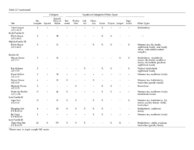
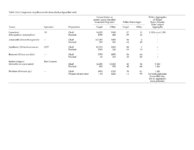
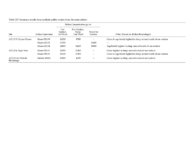
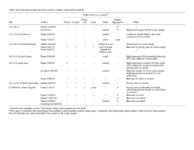
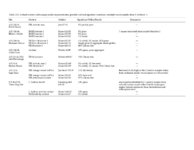
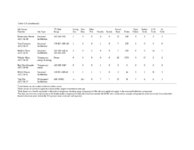
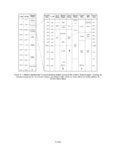
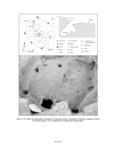
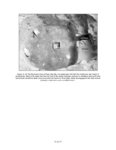
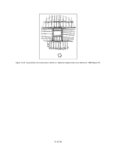
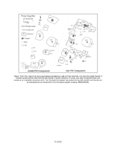
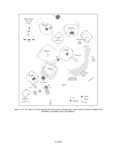
Show produce cotton cloth, whether for home use or in social negotiations, could have been a driving force behind shifting much family living to other rooms and activity spaces for a significant portion of the year, thereby transforming pit houses into a more specialized architectural form. The addition of a recess, often masonry lined, to Kayenta kivas might be seen as another aspect of increased ceremonial uses of kivas through time. The middle Pueblo II NMRAP examples lack these features but most kivas that are late Pueblo II or later in age have them; the lack of these recesses in the Sapo Seco and Waterjar Pueblo examples is notable in this regard. Recesses might have been places for storage of ceremonial (or utilitarian) items when not in immediate use. The Hillside Hermitage kiva appears transitional in characteristics between a Pueblo II pit house for living and a kiva. The size, shape, ventilator, and certain floor features make this structure more typical of kivas. Its depth also sets it apart from typical Pueblo II pit structures; at 1.1 m deep, the feature was two to three times as deep as most pit houses of this period. Structure 6 was not, however, fully subterranean, as is typical for kivas in this area. It also contains a large storage pit, the only potential food storage feature at the site. Brew (1946) and Smith (1990) have eloquently summed up the dilemma of defining pit structures as either kivas or secular habitations. In the process of describing the problems involved in distinguishing kivas from habitation rooms at Alkali Ridge and the range of architectural variation that occurred among both types of structures, Brew (1946:204-205) discussed the lack of cohesive and consistent trait complexes to characterize kivas in the San Juan and Kayenta Anasazi regions. By quantifying the presence and form of architectural traits such as benches, pilasters, deflectors, ventilators, hearths, niches, and plaster, as well as size and depth, Brew (1946: Table 5) showed that a clear division was not present among kivas and domestic structures. Smith (1990:70) summarized the problem by stating that "there is not one architectural feature that is either universally present in all kivas or universally absent from all non-kivas, or vice-versa" in the San Juan and Kayenta areas. There is similar variability in structure morphology within the N16 corridor. Suites of traits are probably more useful in defining a kiva, but it may not always be possible to separate structures into kiva/non-kiva categories based on trait lists. Small Jar Pueblo, at the northeast foot of Navajo Mountain, has a more typical layout for Pueblo II sites in the Kayenta region, with a row of jacal structures facing southeast toward a kiva (Lindsay et al. 1968:128-130). The circular kiva contained a southern recess lined with masonry, and the main chamber walls were plastered. The kiva floor was also prepared, coated with layers of clayey sand. The hearth was unlined and less formal than the one in Structure 6, but it had a more formal set of other floor features that in order of occurrence from southeast to northwest were ladder rests, a stick and mud deflector, an ash pit, a hearth, and a foot drum or some other special pit. Posts set into the walls were reminiscent of Structure 6, but less numerous. The kiva was nearly 3 m deep, and presumably its roof was flush with the ground surface. Small Jar Pueblo was occupied at least a generation later than the Locus B habitation of Hillside Hermitage. The temporal span between these two sites points to the change that occurred within a given class of structure during the Pueblo II period, becoming less of a domestic structure through time. In this sense, Structure 6 might be considered a "proto-kiva." Brew (1946:208) noted that changes in architectural styles seldom appear at exactly the same time through space, and that new and old architectural details often occur within a single structure, as new traits are adopted and others retained. He correctly noted that retention of old styles concurrent with adoption of new ones is a universal aspect of human behavior, and that models of behavior that do not consider this reality will certainly fail to provide adequate explanation of the archaeological record. The variable use and combination of architectural traits, however, can cause difficulties in classification, as in the kiva/pit house debate. In later periods, kiva architecture was more regular, but single architectural traits were still subject to great variation (Smith 1972). Such a situation should not necessarily surprise the archaeologist familiar with historic and recent Hopi kivas, the generally accepted ethnographic analogy of the prehistoric kivas. Brew (1946:211) noted that Hopi workers at Alkali Ridge did not find the variation in sipapu presence odd, because "some kivas and societies hold ceremonies involving the use of sipapus while others do not." Lekson (1988) has also commented on this dilemma. He believed that the attempt to trace kivas further back in time and to find antecedents in the Basketmaker pit houses was based on a political trend in archaeology rather than on sound archaeological or ethnographic research. He argued that the pit house to pueblo transition, generally attributed to the Basketmaker III-Pueblo I transition, actually took place during Pueblo IV. Lekson argued that instead of asking when pit structures began to have kiva-like features and why people eventually began to live in surface structures and use pit structures as ceremonial chambers, we should ask why people began to use aboveground rooms for storage and other purposes that had traditionally involved underground pits, cists, and rooms. Lekson stated that V.15.21 |