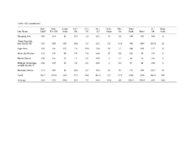
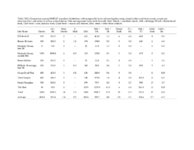
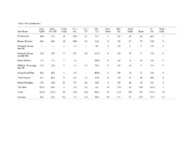
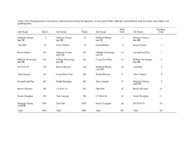
| OCR Text |
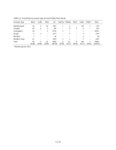
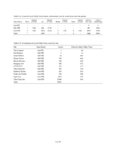
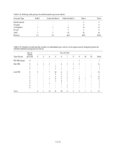
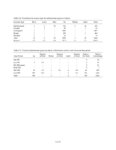
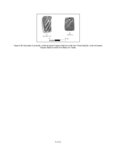
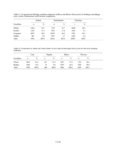
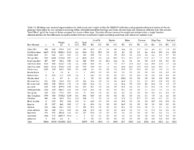
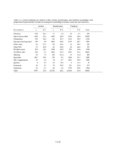
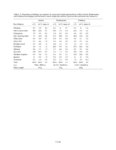
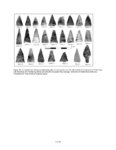
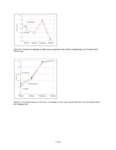
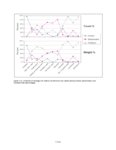
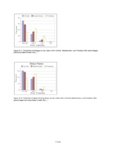
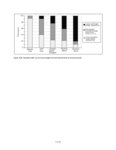
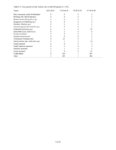
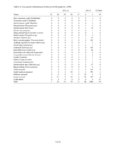
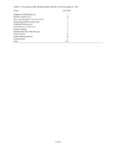
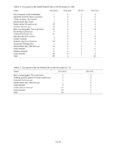
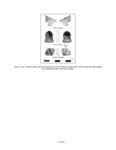
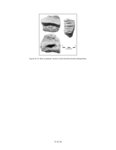
Show Kayenta region were not in situ foragers who had adopted domesticates but rather were migrants from the south, an expanding front of preceramic farmers (Berry and Berry 1986; Matson 1991, 2002). Craft Production, Gender, and Other Factors in Bifacial and Expedient Technology In the Southwest, as well as other parts of the new world, an increase in expedient flake tool production at the expense of bifacial tool production has long been associated with changing technological strategies as residentially mobility decreased after the adoption of domesticates (e.g., Parry and Kelly 1987; but see also Young 1994). Among other things, the general argument is that highly mobile people produced easily transportable and reusable tools, which in North America were generally bifaces. The data presented above clearly show a trend of increasing core/flake reduction from the Archaic to Puebloan periods with Basketmaker as intermediate. Stable isotope analysis of Basketmaker skeletons (Coltrain et al. 2007; Martin et al. 1991) coupled with the analysis of feces and macrobotanical remains (see summary in Matson 2007) makes it clear that western Basketmaker groups were highly dependent upon maize- essentially little different from Pueblo II and Pueblo III Anasazi groups of the Four Corners region. The NMRAP Basketmaker sites produced abundant maize remains, fully consistent with the regional isotope data and other evidence. A vast reduction in residential mobility in the Basketmaker period over the Archaic is indicated by the kinds of habitations excavated in the N16 ROW-multi-generational settlements with well-built houses, dense trash accumulations, and voluminous storage capacity. Despite heavy maize reliance and what appears to have been substantial residential stability, bifacial reduction continued to be a central aspect of Basketmaker technology. Indeed a case could be made that the skill level in biface reduction actually increased in Basketmaker times over the Archaic, at least for some flintknappers, as represented by the large and well-thinned dart points, even using intractable materials, but especially by the large knives, such as the excellent example in Figure 8.9 of Hurst and Turner (1993), which came from Cave 7 in southeast Utah; it measures more than 90 mm long, has a width to thickness ratio of 8.3:1, and lacks stepped or hinged flakes on either face-testament to a high degree of percussion thinning skill. With tools of this caliber there is at least the possibility of semi-specialized production since perhaps not every flintknapper had the necessary abilities. The discovery context of this specimen might also signify that it was produced for a special purpose that required restricted knowledge and training since it occurred within one of the dispatched males (field no. 196, AMNH no. 7351) at the site "between the ribs of right breast" (Wetherill catalog notes, see Hurst and Turner 1993:162: Figure 8.9); this male was given special treatment by the placement in the burial of 24 projectile points, a pipe, and other objects (Hurst and Turner 1993:181). A large knife blade for the express purpose of being used to stab a notable and feared adversary might be just the sort of production task either best left to a specialist or at the very least requiring production away from profane habitations or perhaps even the contact with women. It is also worth considering who in terms of gender accounts for the majority of lithic reduction debris at settlements and how this aspect might have changed through time or at the types of sites that are routinely sampled and compared. In a foraging strategy of high residential mobility, family groups would have circulated widely in a region, providing ample opportunities for hunting but with much gear maintenance occurring at each temporary residential camp. Moreover, women were as mobile as men or at least nearly so and along with manos, probably kids, and plenty of other gear, they may have had to transport the stone or tools for their own needs; transportability was key for all members of a group. As residential mobility decreased in the Basketmaker II times there is likely to have been a corresponding increase in logistical mobility as males spent more time away on hunting trips and other forays. Logistic hunting trips would have become more important as resource depression set in around primary and secondary residential sites-the portions of the landscape that became used intensively That this occurred for at least one preceramic Southwest agricultural population is supported by femoral shape index, which showed that early agricultural males were as mobile as preagricultural foragers but that early agricultural females had a significant drop in mobility, making them comparable to the fully sedentary females of Pottery Mound (Ogilvie 2005:96-99, Figure 4.3). The great reduction in mobility- staying put in one or two places for major portions of the year, "tethered" to agricultural fields and winter stores-may well have led to an increase in the size and bulk of female tool kits, including pecking stones. The transportability constraint had been lifted. That along with the stockpiling of cores for detaching flakes as needed for expedient use would have increased the proportion and size of reduction debris that accumulated at residential locations, especially core reduction flakes. At the same time, male reduction activity, especially that focused on the production of dart points and large knives, increasingly might have occurred away from habitation sites, happening instead at hunting camps or specialized reduction loci near raw material sources. The overall result is the "swamping" of biface reduction debris V.5.13 |