| OCR Text |
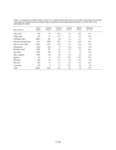
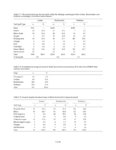
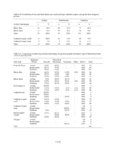
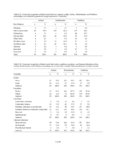
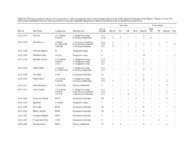
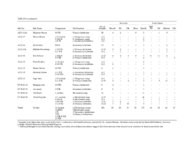
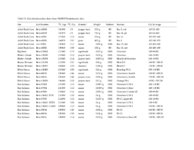
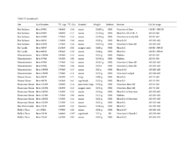
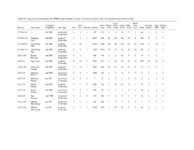
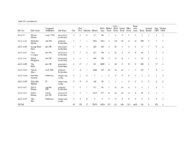
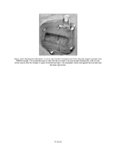
Show seems likely given the presence of a cist. Natural Shelters and Settlement Roles The natural shelter provided by a cave or alcove was important throughout Anasazi prehistory, but with use most prominent during Basketmaker II, Basketmaker III, and late Pueblo III. Both Matson (1991:117) and Smiley (1994:182) have argued that shelters were preferred for habitation and storage during the early portion of the Basketmaker stage, with open locations not widely used for residential settlement until around the Christian era. Although this might be true in some areas, in the northern Kayenta region there is no evident temporal priority of shelter use over open settlements. All radiocarbon dating of Basketmaker II remains from caves on the Rainbow Plateau have returned assays with no greater antiquity than about 100 cal. AD: two dates from Dust Devil Cave (Geib 1996a: Table 11), three dates from Sand Dune Cave (Geib 2004: Table 1), six dates from Atlatl Rock Cave (Chapter 2 of Volume II), and eight dates from the Desha Caves (Geib and Robins 2003). Shelter use appears to be no more than a component of overall Basketmaker II settlement organization, wherein open pit house habitations figured prominently from the beginning of Basketmaker II occupation of the northern Kayenta region at around 300 cal. BC or slightly before. Rockshelters are not a site type per se since they may include sites functionally equivalent to other types mentioned previously. Many shelters probably served as habitations, as Kidder and Guernsey (1919:206-207) originally suggested; Smiley (1993:250) among others has further championed this view. On the Rainbow Plateau, shelters such as Sand Dune Cave appear to have been used this way, but there are also examples used almost exclusively for storage, such as the Desha Caves (Geib and Robins 2003; Schilz 1973); Lipe (1970:100-103) discusses similar sites from the Red Rock Plateau. Consequently, Geib and Spurr (2000) subdivided the rockshelter class into sheltered habitation and sheltered storage, a distinction that still seems useful. Some sheltered storage sites appear closely associated and functionally linked with adjacent open habitations (e.g., Atlatl Rock Cave, Chapter 2 of Volume II; also Geib and Spurr 2000:188). Rockshelters formed a key part of the earliest phase of Basketmaker II settlement in the Kayenta region, the White Dog phase, but they were also central to later Basketmaker II occupation, at least for the northern Kayenta region and perhaps farther south as well. Sheltered Habitation. Sand Dune Cave is the best known example of a natural shelter on the Rainbow Plateau that Basketmakers evidently used for both habitation and storage. Excavation of this cave uncovered numerous storage cists, five sleeping beds, hearths, and a substantial accumulation of living refuse, leading Lindsay et al. (1968:101) to conclude that the cave "was used largely as a habitation and storage area rather than for interment of the dead." The cave yielded a wealth of Basketmaker II artifacts and other remains with most artifacts closely resembling those from White Dog Cave (Guernsey and Kidder 1921) and similar sites of the Kayenta region (Kidder and Guernsey 1919; Guernsey 1931). Among the notable finds from the site was a whole beautifully preserved atlatl and dog skin bag that contained a hunter's tools and other paraphernalia (Cache 1). The Basketmaker occupation of Sand Dune Cave was assumed by the excavators to correspond in age to the then-postulated antiquity of these preceramic farmers elsewhere in the Four Corners region of the Colorado Plateau (roughly AD 0-500). None of the Basketmaker remains from the cave were directly dated in the 1960s and the only chronometric data available were 28 non-cutting (vv) tree-ring dates on charcoal from Hearth 9 (Harlan and Dean 1968:381). The youngest date from this feature was AD 701++vv, with the others ranging from AD 696 to 491. By linking these tree-ring dates with the Basketmaker II remains from the cave, continuation of a Basketmaker II lifeway to AD 700 seemed evident (Lindsay et al. 1968:102, 364). However as explained by Geib and Spurr (2000:178-179), the Hearth 9 tree-ring dates cannot be used to date the Basketmaker II occupation of Sand Dune Cave. Moreover, recent radiocarbon dating firmly demonstrates that the hunter's bag from Cache 1 was made and used late in Basketmaker II times (cal. AD 80-330 based on the average of three statistically contemporaneous dates; Geib 2004). The dating of this one bag is an important contribution, but it would be ill advised to assume that the AD 80-330 span applies to all Basketmaker remains from the site. Far more assays need to be run on the collections from this site. Another site of this class is Atlatl Rock Cave on the southeast edge of the Rainbow Plateau (see Chapter 2 of Volume III). One important aspect of this cave is that it appears to have been continuously occupied during the Basketmaker II-III transitional interval and it contains Obelisk Utility, an early brown ware pottery. This site is also notable because a slab-lined pit house and other slab-lined features occupy a small flat below the cave. Based on the use of upright slabs to line the entire circumference of the house, we believe that this feature dates to the time that Obelisk Utility was in common use. In the cave proper, Basketmakers constructed numerous storage cists and pits. Six radiocarbon dates on maize V.14.31 |